
Tambor-onça: the Brazilian "cousin" of the cuíca and its role in bumba meu boi.
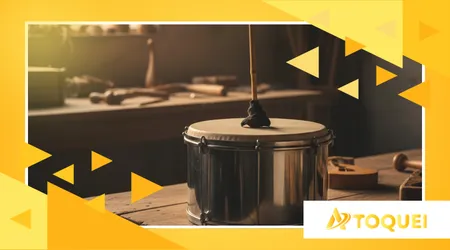
THE drum-jaguar It is an essential friction instrument in the culture of Maranhão, possessing a sound mechanism that produces a deep roar, faithfully resembling the roar of the largest feline in the Americas.
Advertisements
Although it shares structural similarities with the cuíca used in samba, its robust construction and ritualistic context in Bumba Meu Boi elevate it to a unique level of mysticism and tradition.
In this article, we will unveil the technique behind this ancestral sound, its importance to national folklore, and the fundamental differences that distinguish it from other Brazilian friction instruments.
Table of Contents
- What technically defines the drum-jaguar?
- How does the sound friction mechanism work?
- Why is it vital to the orchestral accent of Bumba Meu Boi?
- Practical differences between the cuíca and the instrument from Maranhão.
- FAQ: Common questions about maintenance and operation.
What is the drum-jaguar And what is its origin?
THE drum-jaguar It is a friction idiophone consisting of a cylindrical body made of wood or metal, covered at one end by a properly tensioned animal skin.
Unlike traditional percussion drums, the sound does not come from the impact of hands or drumsticks, but rather from the friction of an internal rod fixed in the center of the leather.
Advertisements
Its origins trace back to the Afro-Brazilian traditions of Maranhão, serving as a tool for rhythmic communication that evokes the strength of wildlife in the popular celebrations of Saint John.
Many researchers associate its structure with African friction instruments, adapted with local materials to create a sound that fills the low frequencies of Brazilian popular orchestras.
++Flatwound vs. roundwound strings: differences for electric bass.
Currently, master craftsmen preserve the manufacturing technique, ensuring that the instrument retains its acoustic identity even with the introduction of new materials in the music industry.
How does sound production work in drum-jaguar?
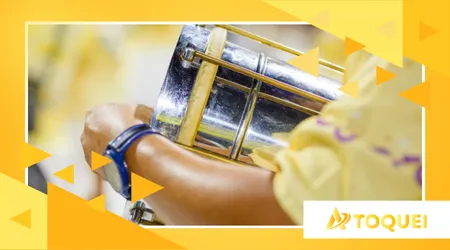
Sound production in drum-jaguar This occurs when the musician uses a damp cloth to rub the wooden stick, usually made of bamboo or tucum, attached to the skin.
This mechanical vibration is transmitted directly to the tensioned membrane, which acts as a natural amplifier, projecting a deep, hoarse, continuous sound reminiscent of a growl.
++Mina Drum: African Tradition in Maranhão
The instrumentalist controls the pitch and intensity of the sound by pressing the skin with their other hand or by varying the speed and pressure of the friction exerted on the rod.
Unlike the cuíca, which requires high-pitched and fast notes, this drum focuses on sustaining long notes that create a dense and earthy atmosphere during folkloric performances.
To better understand the acoustic physics involved in membrane vibration, the IPHAN Portal It details how intangible assets utilize natural resources to create unique sonic identities.
Why the drum-jaguar Is it fundamental in Bumba Meu Boi?
In the context of Bumba Meu Boi, especially in the orchestral style, the drum-jaguar It plays the role of rhythmic "bass," marking the time and giving weight to the music.
Learn more: Rebolo, tantan and repique de mão: differences and uses in pagoda
The presence of this deep sound is what distinguishes the celebrations in Maranhão from other regional festivals, providing a harmonic foundation that supports the brass instruments and rattles of the ensemble.
Symbolically, the roar of the instrument represents the presence of untamed nature, connecting the performers and the audience to the land and the myths surrounding the death of the ox.
Without the precise marking of this drum, the rhythm would lose its most dramatic characteristic, as it guides the steps of the main characters during the choreographic evolutions in the terreiro (religious space).
In 2026, the appreciation for these traditional instruments grows as a form of cultural resistance, attracting young musicians interested in preserving the rhythmic authenticity of Northeast Brazil.
What are the main differences between this instrument and the cuíca?
Although both operate on the principle of friction, the drum-jaguar It has considerably larger dimensions than the traditional cuíca used in the samba schools of Rio de Janeiro.
The body of the Maranhense drum is deeper, which favors the resonance of low frequencies, while the cuíca is designed to reach bouncy mid and high registers.
Explore more: Culture, Festivals and Rituals in the Amazon
Another notable difference lies in the material of the stick; while the cuíca uses thin bamboo, the northeastern instrument may have a stick that is more robust to withstand the force.
In terms of performance, the cuíca is often soloistic and playful, while the Maranhense drum assumes a sober, ritualistic posture with continuous rhythmic support.
Technical Table: Comparison of Acoustic Characteristics
| Feature | Jaguar drum | Traditional Cuíca |
| Dominant Frequency | Bass / Sub-bass | Medium / Acute |
| Body Material | Long wood or aluminum | Metal or Wood short |
| Skin Type | Goat or cowhide | Thin animal skin or synthetic leather |
| Rhythmic Function | Support and marking | Soils and counterpoint |
| Main Context | Bumba Meu Boi (MA) | Samba and Carnival (Rio de Janeiro/São Paulo) |
How is this century-old instrument maintained?
Maintain a drum-jaguar Maintaining it in perfect condition requires specific care regarding skin hydration and the integrity of the internal friction rod, preventing cracks due to dryness.
The musician should always use a clean, slightly damp cotton cloth, as excess water can soften the leather too much and compromise the original tuning.
After performances, it is recommended to slightly loosen the tension on the tuning screws so that the skin does not suffer unnecessary mechanical stress during rest periods.
Storing the instrument in well-ventilated places, away from excessive humidity, prevents the growth of fungi that could degrade the natural fibers of the leather and wood of the body.
Traditional masters often apply resin or pitch to the rod to increase friction, ensuring that the animal's roar is projected with maximum clarity and sound power.
Why learn to play Brazilian friction instruments today?
Learning to play the drum-jaguar In 2026, it represents a rescue of our cultural diversity, allowing the musician to explore sound textures that modern synthesizers rarely manage to faithfully replicate.
The friction technique develops a unique motor sensitivity, requiring absolute control over pressure and moisture, transforming the act of touching into an almost meditative experience.
Studying these rhythms opens doors to innovation in contemporary music, where producers seek organic timbres to fuse electronic elements with deep roots in national folklore.
Furthermore, the demand for percussionists who are proficient in regional instruments has been growing at international world music festivals, highlighting the value of Brazilian artists who are familiar with their traditional roots.
By mastering this drum, the instrumentalist not only plays notes, but carries with them centuries of history, sweat, and the vibrant soul of Maranhão's popular festivals.
Conclusion
THE drum-jaguar It is much more than a musical object; it is the voice of a cultural ecosystem that resists time and the homogenization of globalized art.
Understanding its mechanics and respecting its history in Bumba Meu Boi is the first step for any enthusiast who wants to delve into the depths of authentic Brazilian percussion.
May this guide serve as an incentive for more people to seek out the workshops of master artisans and keep alive the powerful roar of this sonorous feline in our backyards.
Frequently Asked Questions
THE drum-jaguar Can it be used in other rhythms?
Yes, although it originates from the folklore of Maranhão, many jazz and contemporary MPB musicians use its deep sound to create experimental and innovative textures.
What is the best material for the inner rod?
Bamboo is the most common material due to its flexibility and strength, but some craftsmen prefer denser woods to obtain an even deeper and fuller sound.
Is the friction technique difficult to learn?
The technique requires patience to find the right point of humidity and pressure, but with daily practice it's possible to master the basics in a few weeks.
Can I use synthetic skin on my instrument?
Although synthetic skin offers greater tuning stability in the rain, animal skin is still preferred by masters for its richer tone and natural harmonics.
Where can I buy an authentic copy?
It is recommended to directly contact artisan cooperatives in Maranhão or stores specializing in regional Brazilian percussion instruments that work with certified artisan lutherie.
