
Review: Keyboards with orchestral sounds vs. digital synthesizers
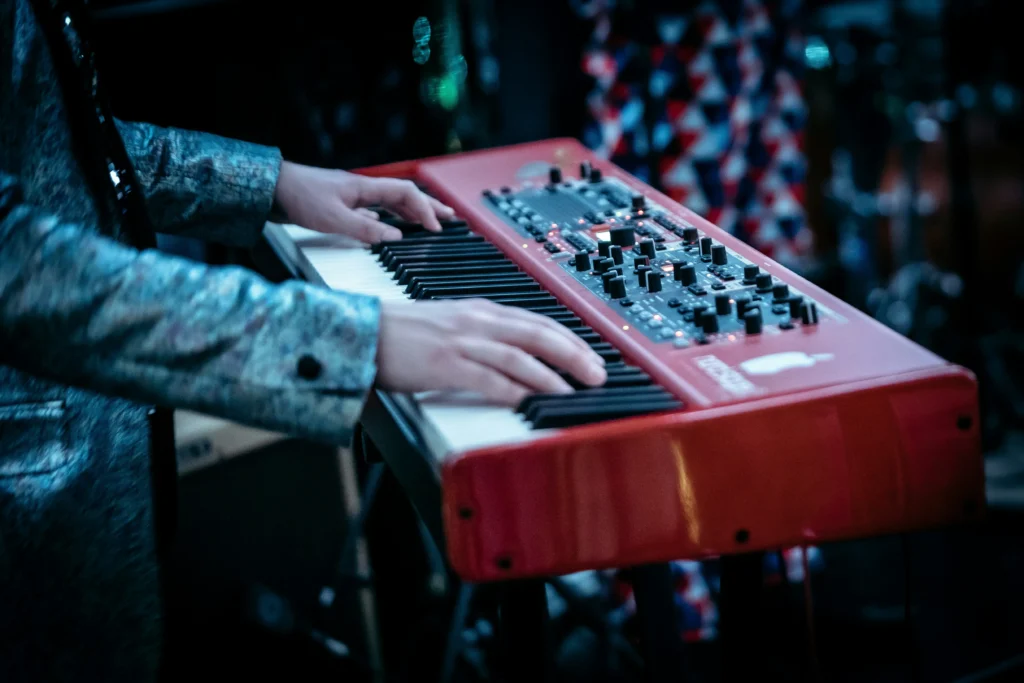
This Keyboards with orchestral sounds vs. digital synthesizers This review delves into the technological frontiers that, in 2026, will define the choices of elite producers, composers, and keyboardists.
Advertisements
The choice between meticulous acoustic realism and the infinite malleability of digital synthesis has never been so complex or nuanced.
Let's analyze the multi-layered sampling capabilities, the role of artificial intelligence in the articulation of breath sounds, and the actual depth of the oscillation motors.
This guide is designed to help you identify which equipment will enhance your sound while respecting the demanding requirements of modern production.
We'll see how each tool performs in the heat of the stage and in the isolation of the studio, ensuring that your investment results in a sonic identity that doesn't sound like "more of the same".
Advertisements
What defines the sonic superiority between the two worlds?
When we put them side by side Keyboards with orchestral sounds vs. digital synthesizers, The first lesson is that superiority is a concept relative to your ultimate goal.
Orchestral keyboards live and die by the absolute fidelity of the recorded sample.
Digital synthesizers, on the other hand, ignore realism in favor of unprecedented textures.
They use algorithms to generate sound waves that can be filtered and distorted, offering a palette that simply doesn't exist in nature.
There's something unsettling about how some musicians try to force synthesizers to sound like real violins.
This is often misinterpreted as versatility, when in reality you end up sacrificing the technical skill and expressiveness of both worlds.
How has the technology of 2026 enhanced orchestral realism?
State-of-the-art orchestral keyboards now utilize what we call "Intelligent Articulation".
This technology allows the instrument to identify the pressure and speed of the note in order to trigger specific legato, staccato, or vibrato samples in real time.
For wind instruments, the leap was revolutionary.
Composers who use double and triple articulation techniques find in these keyboards a tactile response that, until recently, was only possible with acoustic instruments or vast software libraries.
For those who wish to delve into the fundamentals of acoustics and understand how sound frequency impacts human perception, the website of Audio Engineering Society (AES) It's a must-see for professionals who take audio seriously.
Why do digital synthesizers continue to dominate sound design?
Digital synthesizers offer parametric control that sample-based keyboards rarely achieve.
In 2026, granular and table-based wave synthesis engines allow you to disassemble any sound and reconstruct it as a new organism.
This flexibility is what defines the sound of contemporary music.
While the orchestral keyboard delivers the past and present with perfection, the digital synthesizer is the sledgehammer that allows the musician to shape the future.
The ability to modulate filters creates harmonic movements that keep the listener captivated by the music.
It's the fundamental difference between playing a static sound photograph and manipulating a living organism that reacts to every movement of your fingers on the knob.
Technical Performance Comparison (Data 2026)
| Technical Specification | Orchestral Sound Keyboard | Modern Digital Synthesizer | Recommended Application |
| Generating Base | High Resolution Sampling | Oscillators and Waveforms | Loyalty vs. Creativity |
| Average Polyphony | 128 to 256 voices | Unlimited (CPU-based) | Complex Orchestration |
| Sample Memory | 4GB to 16GB (Internal) | N/A (Focus on Processing) | Use of Giant Libraries |
| Articulation | Realistic Simulation (Legato) | Modulation via LFO and Envelopes | Film Soundtracks vs. EDM |
| Ease of Use | Plug-and-play (Presets) | Steep Learning Curve | Speed vs. Customization |
What is the best choice for movie soundtracks?
For epic compositions, the use of Keyboards with orchestral sounds vs. digital synthesizers It is usually a hybrid, but the structural basis almost always begins with the weight of the strings and brass instruments of orchestral keyboards.
They deliver the necessary density to convince the human ear that there is a real orchestra there.
The synthesizer then comes in, like an atmospheric layer, adding sub-bass and textures that traditional orchestras simply cannot physically achieve.
Read more: How to use soundtracks to regulate emotions in children
This symbiosis is what defines the big blockbusters of 2026.
The keyboard brings the emotional authority of classical tradition, while the synthesizer injects the technological modernity that modern audiences demand from an impactful soundtrack.
When should you invest in a workstation that combines both technologies?
Many professional keyboardists end up opting for high-end workstations that eliminate the need to choose one side.
These devices have dedicated motors for both sample reproduction and pure digital synthesis, all within the same chassis.
Learn more: Digital piano reviews for beginners
Although the cost is high, the workflow gain is incredible. You can switch between a meticulously recorded grand piano and an aggressive synthesized lead without having to change channels or load external files mid-show.
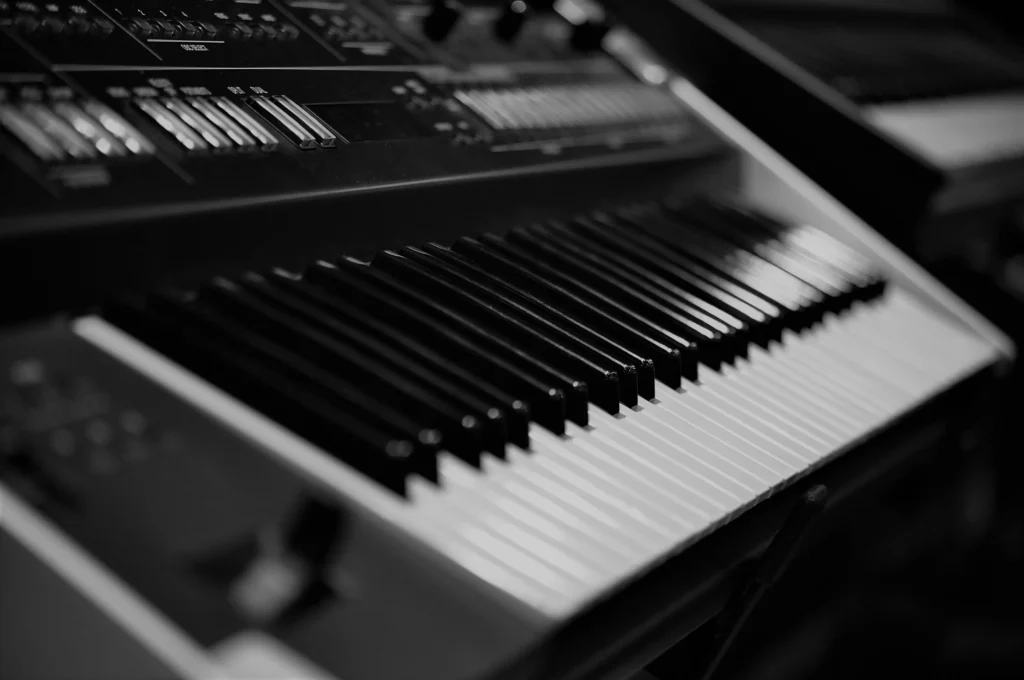
Robust hardware ensures zero latency, something sacred in live performances. By 2026, the stability of these integrated systems will have definitively overcome the reliance on laptops on stage for most major world tours.
How does artificial intelligence influence these instruments today?
In 2026, AI will be used to predict melodic phrases and adjust the dynamic articulation. On orchestral keyboards, it will smooth transitions between notes, eliminating that irritating "machine-gun" sound of older equipment.
In synthesizers, artificial intelligence suggests modulation paths based on the timbre you are creating.
This doesn't replace the musician, but acts as a technical assistant that speeds up the process of designing a denser sound.
To explore the latest research on innovation in synthesis and cutting-edge musical technology, the IRCAM (Institut de Recherche et Coordination Acoustique/Musique) It remains the absolute world reference in sound experimentation.
Choose between Keyboards with orchestral sounds vs. digital synthesizers It is, at its core, about choosing the language of your musical narrative.
If your priority is emotional authenticity and reverence for classical sounds, the orchestral keyboard is unbeatable.
If your desire is to explore new worlds and break down barriers, the digital synthesizer offers the infinite playground your creativity demands.
The technology of 2026 allows these two giants to coexist, creating a hybrid sound that is the hallmark of our era.
Learn more: Difference in sound between an open and closed mouthpiece.
The best instrument will always be the one that disappears between your intention and the ear of the listener.
FAQ: Questions about Music Technology in 2026
Are orchestral sounds on keyboards better than computer VSTs?
The audio difference is minimal today, but keyboards win in terms of zero latency and tactile response. Modern workstations offer a much more organic and reliable experience, especially when you don't want to rely on an operating system on stage.
Can digital synthesizers perfectly imitate pianos?
That's not their strong suit. Although they simulate the structure, they lack the sympathetic resonance and complex harmonics that only multi-layered sampling from an orchestral keyboard or dedicated piano can faithfully deliver.
What equipment is most durable for those who live on the road?
Workstations from renowned brands are tanks, built for rigorous transport. Smaller digital synthesizers are also robust, but their touchscreens and knobs require top-of-the-line protective cases to avoid mechanical headaches.
Do I need to master advanced music theory to use a synthesizer?
It's not mandatory, but understanding the principles of synthesis, oscillators, filters, and envelopes is what separates amateurs from professionals. For orchestral keyboards, a basic knowledge of arrangement helps to use articulations in a way that sounds realistic.
Have the prices of these instruments fallen with technological advancements?
Entry-level technology has become much cheaper, but elite models maintain high prices. This is due to extensive research into AI and the quality of physical components, such as keys with real piano weights and ultra-durable metal casings.
