
The Orff Method in Practice: Real-life Activities for Young Children
To experience The Orff Method in Practice It revolutionizes early childhood music education by transforming abstract concepts of rhythm and melody into physical, playful, and highly collaborative experiences for early childhood.
Advertisements
Developed by composer Carl Orff, this pedagogical approach eliminates the rote learning of complex scores, prioritizing the child's natural instinct to play, sing, and move.
This practical article presents the pillars of this elementary methodology, structured activity sequences for classrooms or homes, the appropriate selection of teaching tools, and the proven cognitive advantages in the neurodevelopment of young children.
What is the Orff-Schulwerk approach and how does it work?
The Orff-Schulwerk approach consists of a humanized music education model that integrates music, movement, speech, and theatre into a single dynamic ecosystem of hands-on learning.
The fundamental premise states that every child possesses innate musicality, needing only organic stimuli to manifest this ability in a spontaneous and creative way.
Advertisements
Instead of imposing rigid theoretical lessons, the educator introduces traditional rhymes, popular nursery rhymes, and simple body games that facilitate the intuitive assimilation of rhythmic and metric structures.
Aesthetic experience precedes intellectual symbolization, ensuring that young children understand sound before learning how to write musical notes.
This pedagogical process gradually evolves from direct imitation to free exploration, culminating in individual and collective improvisation by students in the classroom.
In this way, barriers to technical performance disappear, allowing children with different levels of motor skills to actively participate and create together.
How can rhythmic games and body percussion be incorporated into children's daily lives?
The introduction of basic rhythmic patterns begins in the student's own body through clapping, chest tapping, finger snapping, and firm footwork.
These physical actions help to internalize the constant musical pulse, developing gross motor coordination in a fun and extremely engaging way.
Experienced teachers use rhythmic echo imitations, where the adult performs a short body phrase and the class responds by reproducing the exact same pattern immediately afterward.
This simple activity improves auditory attentional focus, immediate sequential memory, and the sense of collective synchronicity among the young participants.
The transition from spoken language to body percussion occurs fluidly, associating syllables of familiar words with specific hand beats.
This direct correlation strengthens the child's phonological awareness, acting as a powerful interdisciplinary resource that accelerates linguistic literacy and early literacy development.
What are the ideal tools for applying the Orff Method in practice?
The instruments designed for this pedagogical approach prioritize ease of use, allowing children to produce harmonious sounds from their very first physical contact with the object.
The central focus is on xylophones, metallophones, and glockenspiels, equipped with removable wooden or metal bars that offer high durability and acoustic precision.
By removing the bars corresponding to notes that do not belong to the pentatonic scale, the teacher eliminates the possibility of unpleasant dissonances during the playful activity.
This clever mechanical adjustment ensures that any combination of notes played by the child results in an aesthetically pleasing and rewarding melody.
To understand the technical categorization of these resources and the ideal age ranges recommended by experts, the table below summarizes pedagogical data advocated by... Brazilian Orff-Schulwerk Association (ABRAORFF):
| Instrumental Category | Practical Examples of Objects | Main Stimulus Developed | Recommended Age Range |
| Modular Blades | Pentatonic Xylophones and Metallophones | Concept of pitch, melody and coordination | From the age of 4 |
| Percussion Effect | Platinelas, Caxixis and Triangles | Timbre discrimination and auditory focus | From 2 years of age |
| Skin and Membranes | Hand drums, Atabaques and Surdos | Rhythmic pulse and intensity control | From 3 years of age |
| Wind Melody | Recorders and whistles for effect. | Air column control and lift | From 6 years of age |
Why does the pentatonic scale make musical improvisation easier for students?
The pentatonic scale, composed of five distinct notes, eliminates the semitone intervals that often generate complex harmonic tensions or obvious listening errors during performance.
This unique structural feature creates a perfect acoustic safety zone for the full development of young children's creative autonomy.
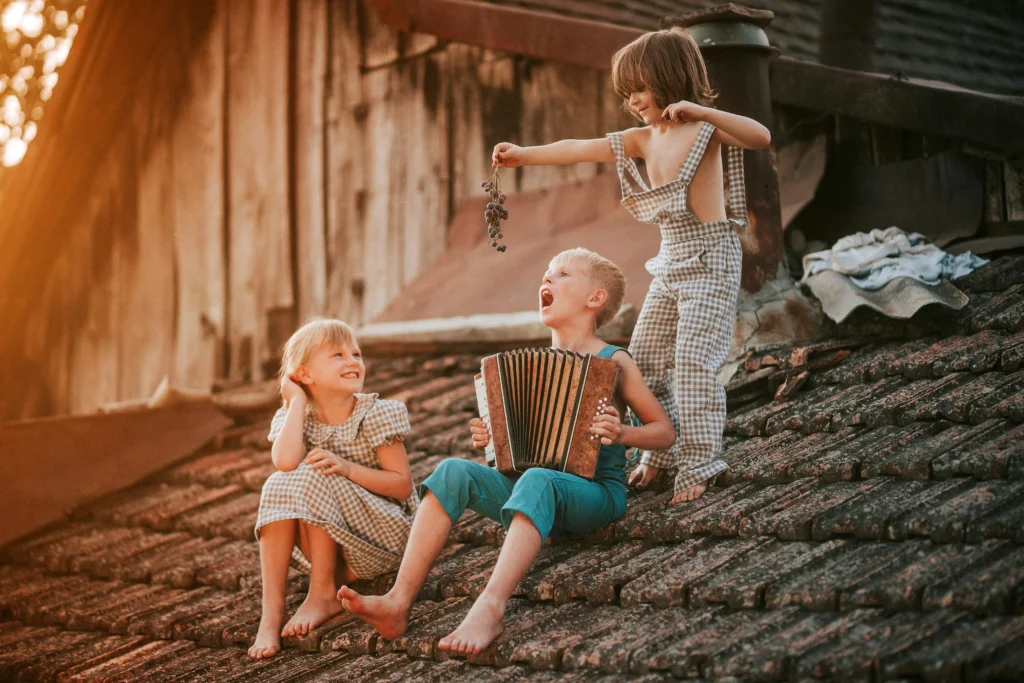
When trying the The Orff Method in Practice, The student realizes that their sound choices are valid, which generates a profound feeling of artistic and professional self-efficacy.
Learn more: What is an Orff Instrument? Benefits for Young Children
The absence of fear of making mistakes liberates children's imagination, transforming moments of instrumental improvisation into rich journeys of self-discovery and emotional expression.
This freedom encourages divergent thinking and cognitive flexibility, as students need to make quick aesthetic decisions while interacting with their peers' arrangements.
Improvisation is no longer a privilege reserved for advanced musicians, but has become an accessible tool for communication and collective play.
When should expressive movement and storytelling be integrated into the dynamics?
The fusion of playful narratives with instrumental sound design should happen regularly to maintain the emotional engagement and interest of contemporary digital natives.
Transforming a classic tale into a journey where each character has a specific sound theme stimulates the deep imagination of childhood.
Body movement comes into play when the children imitate the physical dynamics of the animals in the story, associating slow steps with the low notes of a heavy drum.
Read more: How to develop children's sound perception through creative games.
Similarly, quick and light movements represent birds, immediately translated by the little ones through agile touches on the sharp glockenspiel.
This kinesthetic integration deeply and lastingly fixes learning in the central nervous system of the young child, uniting affect and cognition.
The coordinated movement prepares the body for future challenges of instrumental precision, refining the fine motor control indispensable for writing and the arts.
Fine Tuning: The Lasting Impact of Elementary Music Education
The consistent application of this musical pedagogical ecosystem builds the foundation for more empathetic, creative, integrated citizens with refined social active listening skills.
Learn more: Music and child neurodevelopment: what studies say
Experiencing music as a collective endeavor teaches respect for speaking turns, mutual cooperation, and the appreciation of individual differences.
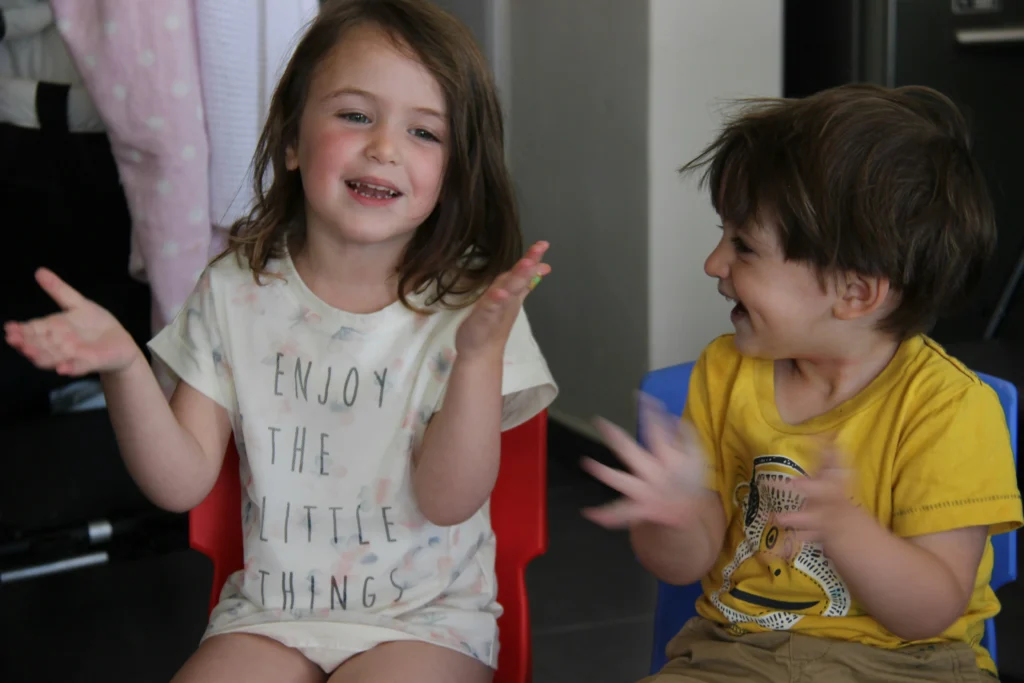
The role of the educator or caregiver is to act as a facilitator of discovery, abandoning authoritarian attitudes that limit the student's original expressive potential.
Allowing children to explore the world of sound with dignity, safety, and playfulness represents the greatest legacy of this revolutionary educational approach.
To explore national curriculum guidelines, up-to-date scientific research, and academic publications on early childhood education practices, please consult the portal of... National Association for Research and Graduate Studies in Music (ANPPOM).
Frequently Asked Questions (FAQ)
Do I need to be a professional musician to apply the Orff methodology with my children at home?
No, because the essence of the methodology lies in the use of accessible everyday elements, such as one's own voice, spoken rhymes, and body clapping. The main focus should be the playful exploration of rhythm and sound together, without the initial requirement of technical virtuosity or reading traditional musical scores.
How can instrumental activities be adapted for young children with hearing impairments?
The educator can emphasize tactile and visual stimuli by using large drums placed directly on the floor so that students can feel the physical vibrations of the sound waves. The use of colorful scarves in choreographed movements helps to visually translate the variations in intensity and tempo of the proposed music.
What is the main difference between the Orff Method and the proposals of Kodály or Dalcroze?
While Orff focuses on the integration of speech, percussion, and blade instruments, Kodály prioritizes choral singing and relative solfège through specific hand signals. Dalcroze, in turn, centers the entire development of the musical ear on Eurythmy, using body movement as the main translator of rhythmic structures.
