
How to apply musical reverse study to difficult solos.
To know Applying reverse musical study to difficult solos This represents a watershed moment in the routine of instrumentalists seeking high performance, technical precision, and efficiency in learning complex repertoires.
Advertisements
The traditional practice methodology, which consists of repeatedly practicing a score from beginning to end, often leads to frustration, mental fatigue, and bad playing habits that are difficult to correct.
Conversely, deconstructing a musical phrase based on its logical resolution breaks down the cognitive and motor barriers that hinder finger dexterity.
This innovative method focuses not only on mechanical repetition, but also on conditioning the brain to move towards a resting point already mastered by the musician.
Mastering the fundamentals of this instrumental reverse engineering transforms seemingly impossible segments into fluid, predictable, and completely controlled sequences in high-pressure presentations.
Advertisements
What is the reverse study method in music, and how does it optimize muscle and cognitive memorization?
The reverse study method in music is a learning technique focused on starting practice with the last measure of a phrase, gradually progressing towards the beginning.
This approach subverts the common habit of always making the same mistake, building an extremely solid foundation for execution in the final stages of the floor exercise.
To the Applying reverse musical study to difficult solos, The instrumentalist assures that, as he progresses through the music, he moves towards the section he has practiced and mastered the most.
This flow drastically reduces stage fright, as the end of the musical phrase becomes a safe, technically comfortable zone.
Neurologically, the brain processes small doses of new information better when they are immediately connected to a motor pattern that is already established and stored in long-term memory.
This technique optimizes study time by eliminating unnecessary repetition of easy sections.
How do you break down a complex soil into microcells and define the correct technical anchor points?
Fragmentation requires the musician to isolate the solo into small cells of two to four notes, invariably ending on the first beat of the following measure.
This endpoint of each microcell acts as an anchor, serving as a safe harbor where the fingers should naturally converge.
To explore scientific research on musical cognition, instrumental teaching methodologies, and articles on the psychology of human performance, consult the publications portal of [organization name]. National Association for Research and Graduate Studies in Music (ANPPOM).
The secret lies in not advancing to the previous cell before executing the current fragment ten times in a row without making any typing or dynamic errors.
Absolute precision at this initial stage prevents the consolidation of incorrect movements into muscle memory.
What are the ideal specifications and metrics for structuring a metronome workout routine?
Overcoming the speed of fast strumming or fingerpicking requires mathematical discipline in controlling the tempo, preventing haste from compromising the clarity of each note played.
To plan your daily training sessions based on psychomotor efficiency data, analyze the structured technical schedule below:
Metric Evolution Dashboard for Reverse Practice
| Reverse Training Stage | Operational Focus of the Cell | Initial Speed of the Metronome | Error-Free Repetition Goals | Central Psychomotor Objective |
| Phase 1: Isolation | Last measure of the solo | 50% of the original progress | 10 clean executions | Focus on typing and pure mechanics. |
| Phase 2: Anchoring | Penultimate + Last block | 60% of the original progress | 10 clean executions | Create the first transitional amendment. |
| Phase 3: Expansion | Adding new cells | 70% of the original progress | 7 clean executions | Develop mental resilience and fluidity. |
| Phase 4: Acceleration | Complete integrated solo | 85% of the original progress | 5 clean executions | To approximate the actual speed of the audio. |
| Phase 5: Performance | Final artistic execution | 100% of the original progress | 3 perfect executions | Consolidate the interpretation and the dynamics |
The metrics prove that Applying reverse musical study to difficult solos It requires patience to keep the metronome at slow tempos during the initial stages of cognitive retention.
Increasing the speed prematurely undoes the benefits of the method, bringing back rhythmic imprecision.
Why does retrograde notepad editing prevent the common mechanical hiccups in sentence transitions?
Mechanical stuttering occurs when the brain hesitates about which movement to make during the transition between two distinct musical phrases that require rapid changes in position.
Practicing from back to front eliminates this hesitation because the subsequent movement has already been exhaustively automated in the previous stages of training.
Read more: How to Create an Effective Music Practice Schedule for Your Level
The hand muscles reflexively execute chord or scale changes, as the physical path of the fingers is already widely known by the motor system.
This continuous mechanical fluidity creates a professional, firm, expressive sound, free from micro-interruptions.
When should you use audio slowdown software to decipher extremely fast-paced audio?
Audio deceleration software should be integrated into the routine whenever the original speed of the solo prevents clear identification of the notes or articulation techniques used.
Modern digital tools can reduce the tempo by up to seventy percent without altering the original tuning of the recorded instrument.
Learn more: Music and child neurodevelopment: what studies say
This auditory precision allows for the transcription of minute dynamic details, such as legato, bends, and vibrato, before beginning the reverse reconstruction process on the instrument.
To analyze the main music technology tools, professional audio editing software, and innovations in phonographic production platforms, access the technical portal of [Company Name]. Audio Engineering Society (AES) Brazil.
Technical Mastery Through Intelligent Practice
Replacing purely repetitive effort with reverse engineering strategies raises the bar for any instrumentalist, optimizing the use of precious daily study time.
The secret of great virtuosos lies not in the number of hours spent playing, but in the methodological quality applied to solving complex problems.
Read more: How to create a music study routine with effective digital feedback.
Combining audio tool technology with the discipline of metronome practice ensures sustainable, enjoyable, and highly motivating technical development for the musician.
May the intelligent deconstruction of musical phrases serve as a foundation for unleashing your creativity and artistic expression in all your future performances.
Frequently Asked Questions (FAQ)
Can I use the reverse study method to learn complete pieces of classical music on the piano?
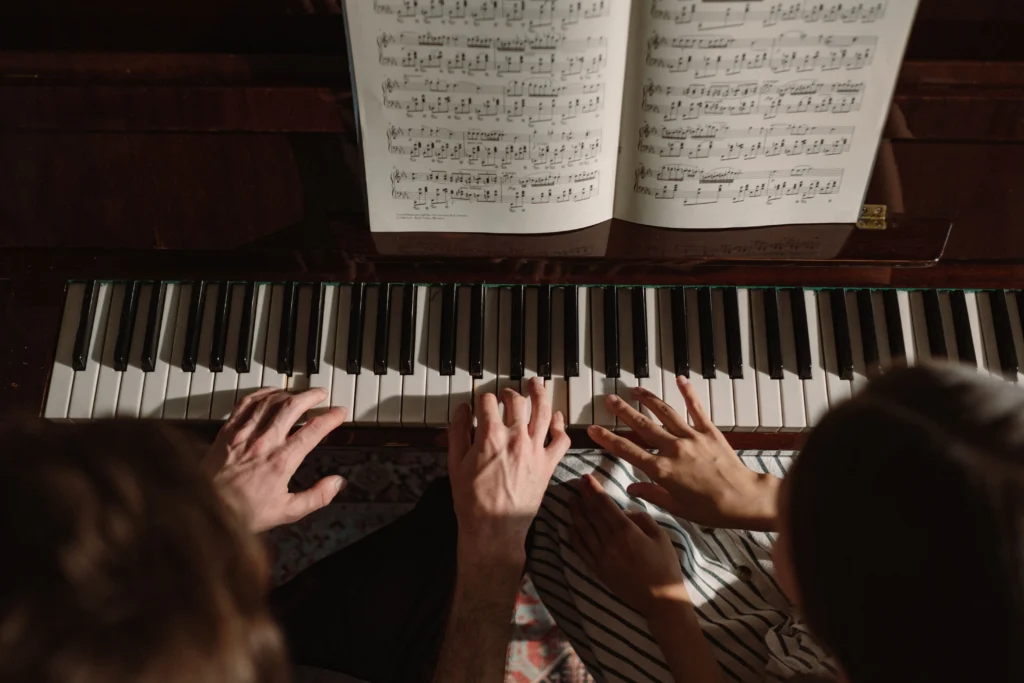
Yes, this methodology is perfectly applicable and highly recommended by conservatory professors for memorizing complex polyphonic pieces on keyboard instruments.
Dividing a classical piece into sections from back to front helps maintain the same level of technical accuracy in both the introduction and the conclusion of the music.
How much time per day should I dedicate to reverse planting to notice real progress in my soils?
It is recommended to dedicate about twenty to thirty minutes focused exclusively on reverse practice within your daily instrumental study routine.
Short sessions with a high level of cognitive concentration produce better muscle memory results than hours of exhaustive training with a scattered mind.
Why do I feel more mentally fatigued when practicing backwards than with the traditional method?
This fatigue occurs because reverse study forces the brain to switch out of automatic execution mode, requiring the creation of new neural connections for novel motor pathways.
This extra cognitive effort is a clear sign that your brain is processing the information in a deep and lasting way.
Is it necessary to practice the hands separately before applying the reverse technique to harmonic instruments?
Yes, on instruments like piano, classical guitar, or rhythm guitar, isolating the left hand from the right hand in the initial stages of retrograde practice accelerates mechanical assimilation.
After mastering the reverse movement of each hand independently, perform the joining slowly, carefully monitoring the metronome.
