
Techniques of the divine box in Brazilian popular festivals.
The domain of Techniques of the divine box It represents one of the most sophisticated pillars of rhythmic and identity preservation within the folkloric manifestations of Brazilian territory.
Advertisements
This double-headed drum used for conducting, intrinsic to the celebrations of the Holy Spirit, demands a unique percussive precision from the drummer to sustain the religious processions.
Far from being merely a musical accompaniment, the batuque follows specific ritual precepts that connect musicality to communal devotion in various regions of the country.
Understanding the artisanal manufacturing process, the ergonomics of the drumsticks, and the variations in traditional strokes reveals the richness of a protected intangible cultural heritage.
This technical article thoroughly explores the instrument's structure, regional rhythmic patterns, essential ethnographic data, and methods of preserving this percussive tradition.
Advertisements
What is the divine box and what fundamentals define its traditional construction and acoustics?
The Divine Box consists of a medium-diameter cylindrical drum, handcrafted with sides made of lightweight wood, such as flexible plywood, pine, or cedar.
Its two membranes, traditionally made of goat or deer skin, are tensioned by means of wooden hoops secured with sisal or nylon ropes.
The presence of an animal gut or wire mat under the resonant skin gives the instrument a characteristic bright, resonant sound.
The domain of Techniques of the divine box It all begins with the manual tuning process, which depends on local atmospheric humidity and temperature conditions.
The most experienced vendors use the heat of a fire or the sun to stretch the dried hides before the start of each street procession.
This organological care ensures that the drum projects its sound clearly even amidst large, noisy urban crowds.
How do rhythmic patterns vary geographically between the festivals of Maranhão and the celebrations of the Southeast?
In the state of Maranhão, the playing of this drum takes on a predominantly female character, where the female drummers perform complex polyrhythms with impressive speed.
Local musical groups, such as Alvorada and Caixeiro-Mor, use rapid alternating double chimes and continuous rolls to greet the festival's patrons and stewards.
In contrast, in the celebrations of the Southeast and Midwest regions, the rhythm adopts a more leisurely cadence, marked by simple beats that accompany the liturgical chants.
To deepen your knowledge of national intangible heritage, historical records, and detailed inventories of cultural assets, consult the... National Institute of Historic and Artistic Heritage (IPHAN).
What are the physical specifications, materials, and ritual functions that differentiate this drum in different regions of Brazil?
Understanding the role of the instrument requires analyzing the technical variations that each community has imprinted on its structure throughout centuries of history.
To evaluate these characteristics based on real and currently established ethnographic research, examine the structured information panel below:
Matrix of Characteristics of the Divine Box
| Cultural Center Analyzed | Average Drum Diameter | Predominant Skin Type | Drumstick Pattern Used | Main Ritual Function |
| São Luís (MA) | 30 cm to 35 cm | Goat (Shaved and Thin) | Lightweight, fine wood | Dawns and Greetings to the Empire |
| Paraty (RJ) | 40 cm to 45 cm | Cowhide or goat hide | Medium-sized oval-tipped | Conducting Carnival Groups and Jiras |
| Pirenópolis (GO) | 35 cm to 40 cm | Sheepskin | Thick hardwood | Versegas accompaniment |
| Alcântara (MA) | 28 cm 32 cm | Goat (Very thin) | Short and headless | Procession and Souls' Touches |
| Mogi das Cruzes (SP) | 42 cm to 48 cm | Thick bovine leather | Long, lightweight felt-lined | Support for the Street March |
Comparative analysis demonstrates that the application of Techniques of the divine box It molds itself directly to the size and thickness of each drum's skin.
Smaller instruments require lighter drumsticks so that the snare's vibration under the skin flows without drowning out the internal resonance of the wooden body.
Why do body posture and drumstick handling directly influence a musician's stamina during long processions?
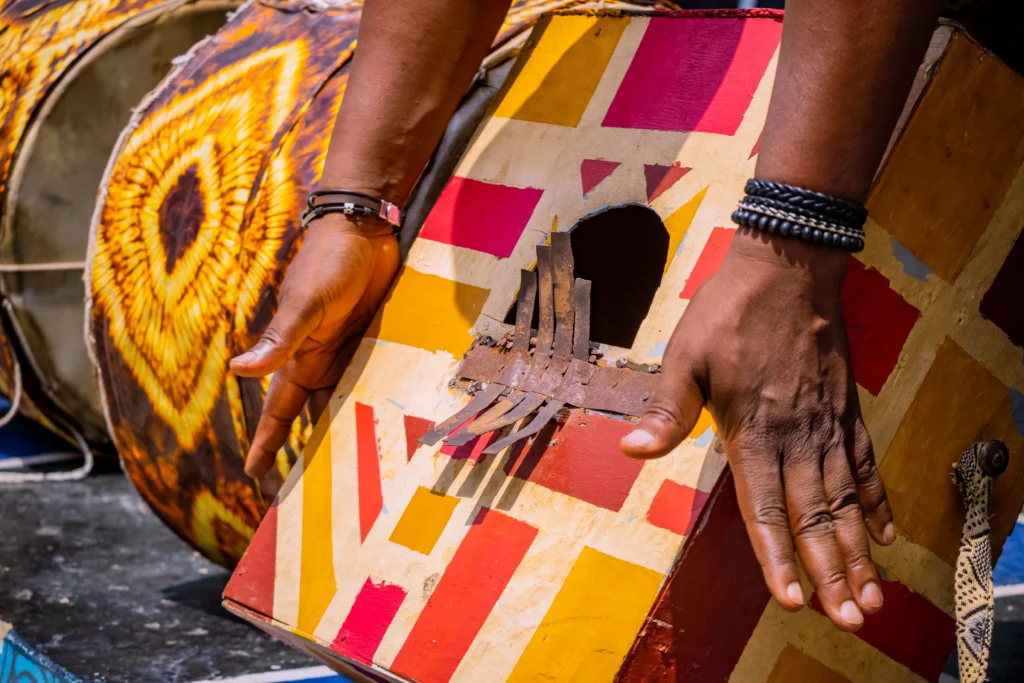
Religious marches often last more than six consecutive hours under adverse weather conditions, requiring the percussionist to intelligently distribute their muscular strength.
The female drummers position the drum slung over their shoulder, suspended by a fabric strap that crosses the shoulder opposite the arm with greater motor dominance.
Read more: Bass Drum: The Heavy Beat of Bandstand Bands and June Festival Bands
The secret to avoiding cramps lies in striking the skin using the natural rebound of the wood, instead of straining the tendons of the forearm.
Bending the knees slightly while walking absorbs the impact of each step, ensuring that the pace remains steady and consistent during processions.
When does the inclusion of traditional percussion instruction in urban workshops contribute to the preservation of community memory?
The relocation of traditional masters to urban centers has allowed new generations to have direct access to this ancestral knowledge without losing the original ritualistic connection.
Music schools and cultural groups promote practical workshops focused on orality, respecting the learning pace of each beginner student.
Learn more: Zabumba: The Heart of the June Festivals in Forró and Baião
To explore sound archives of Brazilian music, historical scores, and biographies of great national instrumentalists, visit the portal of... National Library Foundation.
This controlled opening democratizes access to the instrument, combating cultural prejudice and strengthening the network of financial support for traditional artisan builders.
Learning to make your own drum teaches respect for nature and the curing times of the animal hides used.
Echoing Faith and Musical Resistance Through the Ages
The percussion of the "Caixas do Divino" (Snare Drums of the Divine) remains one of the most compelling proofs of the resilience and reinvention capacity of Brazilian popular culture.
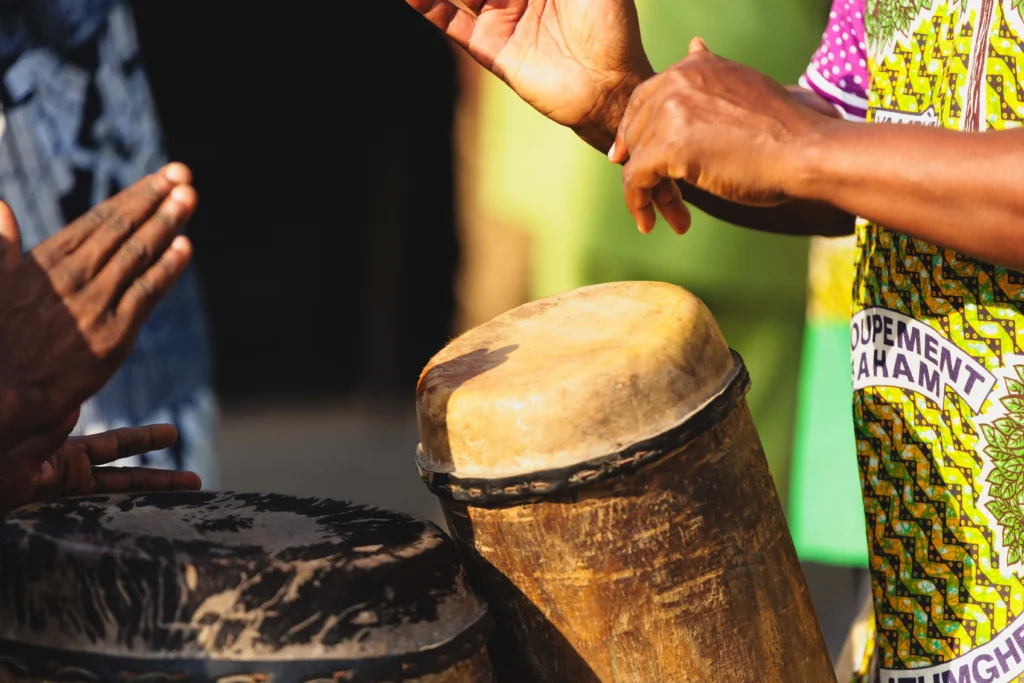
Combining the technical precision of the drumming with a feeling of communal devotion transforms each procession into an act of living historical preservation.
Read more: The bass drum: a traditional instrument used in traditional rural festivals.
Ensuring that this knowledge continues to be transmitted orally guarantees the survival of festivities that shape the very soul of the Brazilian people.
May the vibrant, rhythmic sound of these drums continue to echo through the streets of the country, celebrating rhythmic diversity, unity, and our rich ancestry.
Frequently Asked Questions (FAQ)
Can the Divine drums be played with any type of commercial drumstick?
The use of conventional drumsticks is not recommended, as their heavy nylon or dense wood tips can pierce the thin, handcrafted drumheads.
Traditional drumsticks are hand-carved from lighter, more flexible woods, with specific diameters and lengths to ensure perfect balance on the drum.
What is the correct procedure for storing the instrument without damaging the tuning of the skins?
The instrument should be stored in dry, well-ventilated places, protected from continuous direct sunlight to prevent the leather from drying out and cracking prematurely.
It is wise to loosen the sisal ropes slightly after performances, relieving the constant tension on the drum's wooden structure.
Are there any gender restrictions for learning these traditional percussion techniques?
Historically, in Maranhão, playing the drums is an almost exclusive prerogative of women, affectionately known as the Caixeiras do Divino (Drummers of the Divine).
In other regions of Brazil, such as São Paulo and Goiás, men and women share the space of the processions without ritualistic gender distinctions.
How does the gut snare influence the final sound of the drum during street parades?
The snare vibrates in sympathy whenever the beater head is struck, producing a whispered, shimmering sound that fills the spaces between the notes.
This acoustic effect increases the perceived volume of the instrument outdoors, allowing the rhythm to be heard over long distances.
