
What is the psaltery and why has it returned to modern folk music?
The rescue of psaltery The contemporary music scene reflects a growing search for authentic acoustic sounds, organic timbres, and expressive arrangements within the modern folk music circuit.
Advertisements
Designed as a stringed instrument plucked or bowed over a wooden soundbox, this ancient artifact offers surprising harmonic richness for producers and composers.
Its trapezoidal or triangular structure allows for the installation of multiple stretched metal strings, ensuring a resonant sustain that perfectly complements guitars, cellos, and light acoustic percussion instruments.
We will analyze the anatomy of this classic instrument, its constructive variations, and the practical reasons that explain its dizzying resurgence in current phonographic production worldwide.
What is a psaltery and how does its acoustic structure work?
It is an instrument belonging to the zither family, consisting of a flat soundbox over which several steel or brass strings are stretched.
Advertisements
Each string is tuned to produce a specific individual note, allowing the musician to perform fast melodies using plectrums, wooden sticks, or bows.
The wood used on top of the soundbox, such as spruce or maple, amplifies the natural vibration generated by touch, projecting clean and crystalline frequencies.
The mechanical simplicity of psaltery It eliminates the need for complex frets or necks, facilitating precise tuning and accurate execution of acoustic arrangements in the studio.
What are the main differences between the bowed and fingering techniques?
The plucked model uses plectra or the fingers themselves to pluck the strings, generating a bright percussive sound similar to that of the harpsichord or the medieval trapezoidal psaltery.
The bow model, developed in a modern way in the 20th century, has beveled side cutouts that allow a horsehair to be rubbed individually against each string.
This continuous friction with the bow produces a sustained and velvety tone, approaching the sound of an old violin with a very characteristic angelic resonance.
Indie folk projects adopt both variations, combining the rhythmic attack of the fingerpicked model with the atmospheric textures of the model played with a wooden bow.
Technical Comparison: Bowed Psaltery vs. Fingered Psaltery
| Construction Feature | Bowed Model | Plucked Pattern | Application in Modern Folk |
| Rope Exaltation Method | Friction by bow with rosin | Plectrum, pick or fingertips | The bow creates background layers; fingerpicking creates solos. |
| Sound Sustain | Continuous and prolonged by the arc | Intermittent with natural decay | Continuous textures for ballads and interludes. |
| Harmonic Box Geometry | Triangular with chamfered edges | Trapezoidal or right rectangular | The triangular shape makes it easier to reach the bow. |
| Medium Difficulty Level | Low to Medium (requires bow control) | Very Low (intuitive and straightforward) | Quick access for multi-instrumentalists in the studio. |
Why has modern folk music revived this ancient instrument?
Contemporary music producers are constantly seeking to move away from the saturation of digital synthesizers, prioritizing real acoustic timbres that add organic feel and human warmth to studio recordings.
Read more: What is the wheel lyre and why has it returned to the folk scene?
The instrument's bright, high-pitched frequency fills the sound spectrum without competing with the bass notes of the double bass or the mid-range frequencies of the lead vocals.
Another key factor is its ease of transport, making it a practical option for acoustic tours and intimate performances in theaters or outdoor festivals.
Historical documents and detailed museum collections about the evolution of stringed instruments can be explored on the portal of Metropolitan Museum of Art (Met Museum).
How is the instrument integrated into current recordings?
In modern studios, sound engineers position small-diaphragm condenser microphones close to the soundboard to capture the upper harmonics and vibration.
Applying subtle effects like spring reverb and analog delays transforms the sound of psaltery in an expansive and highly immersive environment.
Learn more: Difference between classical, folk and jumbo guitar: which one to choose?
Composers of film and video game soundtracks use this sound to evoke rustic atmospheres, bucolic landscapes, and fascinating historical narratives with great precision.
This versatility ensures that the instrument interacts perfectly with twelve-string guitars, banjos, banjoleles, and harmonized vocals typical of contemporary folk music.
Where can you find and how do you choose your first instrument?
Luthiers specializing in ethnic and historical instruments produce handcrafted pieces using treated, high-quality woods, ensuring structural stability and excellent tuning for extended periods.
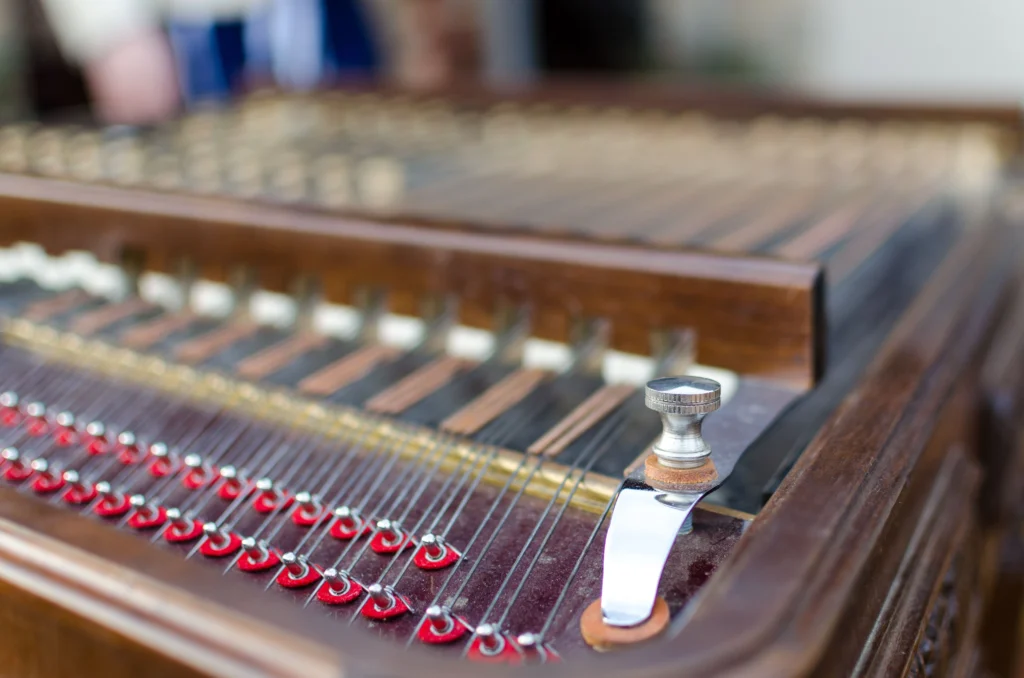
Before purchasing a model, assess the quality of the tuning pegs and the strength of the central bridge, which supports the high tension of the metal strings.
Choosing models with built-in piezoelectric pickups makes it easier to connect directly to studio amplifiers or mixing consoles during live performances without generating feedback.
Read more: A guide to Brazilian luthiery: how handcrafted guitars are made.
To search files on cultural preservation, intangible heritage, and the history of traditional music, access the database of... Smithsonian Center for Folklife and Cultural Heritage.
Frequently Asked Questions (FAQ)
Is the psaltery a difficult instrument for beginners to learn?
No, the linear arrangement of strings tuned to diatonic or chromatic scales makes musical navigation extremely simple and intuitive for beginner students.
What is the fundamental difference between this instrument and the dulcimer?
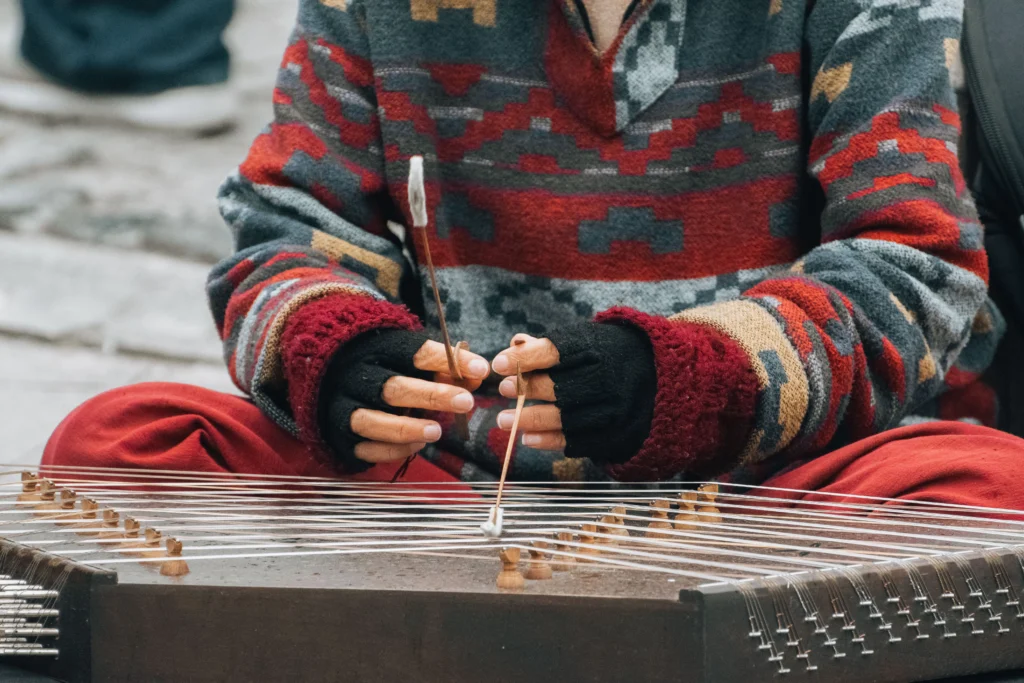
The dulcimer is usually struck with small wooden mallets, while the model analyzed is played directly with plectrums or rubbed with a bow.
Do I need to use specific ropes to make the replacement?
Yes, carbon steel or brass strings with specific gauges are used to withstand the tension of the soundbox without warping the wooden structure.
How do you keep your instrument in tune during performances?
Keep the instrument in a place with controlled humidity and temperature, using a suitable tuning key to adjust the pegs before each use.
The rediscovery of psaltery Modern folk music proves that the search for sonic authenticity remains more alive than ever. Incorporating this acoustic relic adds value and sophistication to any contemporary musical project.
