
The importance of the berimbau in regional and Angola capoeira.
THE The importance of the berimbau in capoeira. It goes beyond mere rhythmic support, acting as the commanding element that governs the rhythm, cadence, and spiritual energy of each roda (circle).
Advertisements
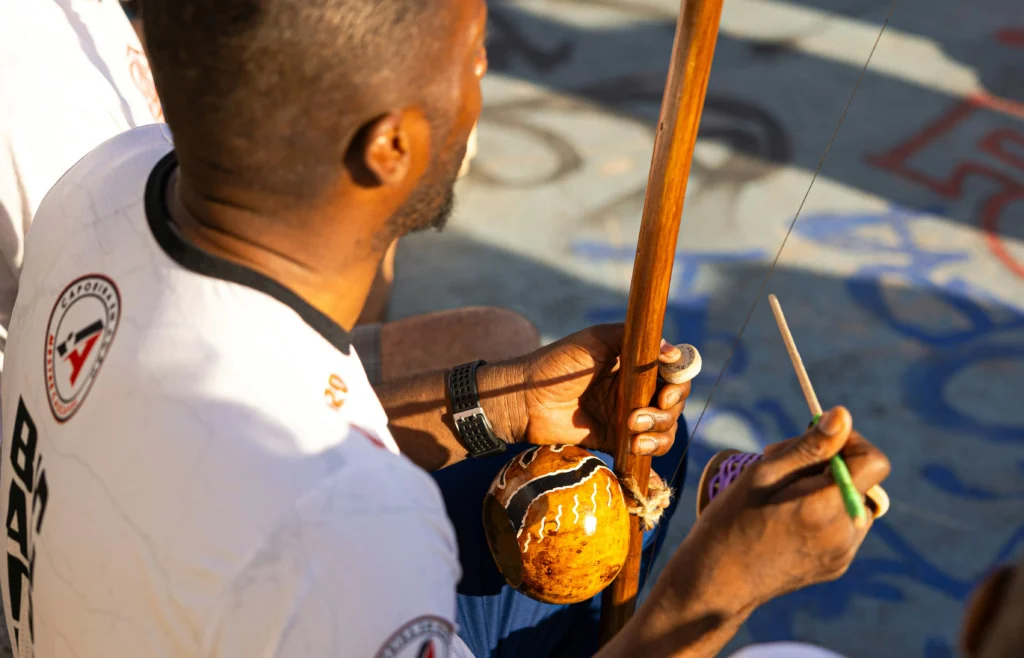
Composed of a wooden rod, steel wire, gourd, and played with a caxixi and dobrão (a type of coin), this Afro-Brazilian percussion instrument dictates the speed of the movements and the style of the capoeira practitioners.
In both the Angolan and Regional styles, the sound of the berimbau preserves ancestral knowledge, guiding traditional chants and establishing hierarchical respect among masters, practitioners, and players of the percussion section.
Understanding the role of this archaic stringed instrument allows us to appreciate the intangible richness of Brazilian culture, recognizing how music shapes the physicality, playfulness, and philosophy of this popular expression.
What is a berimbau and how does it control the roda (circle)?
The berimbau is a percussion string instrument that leads the capoeira rhythm, emitting acoustic vibrations that define when the game should be slow, low, or fast.
Advertisements
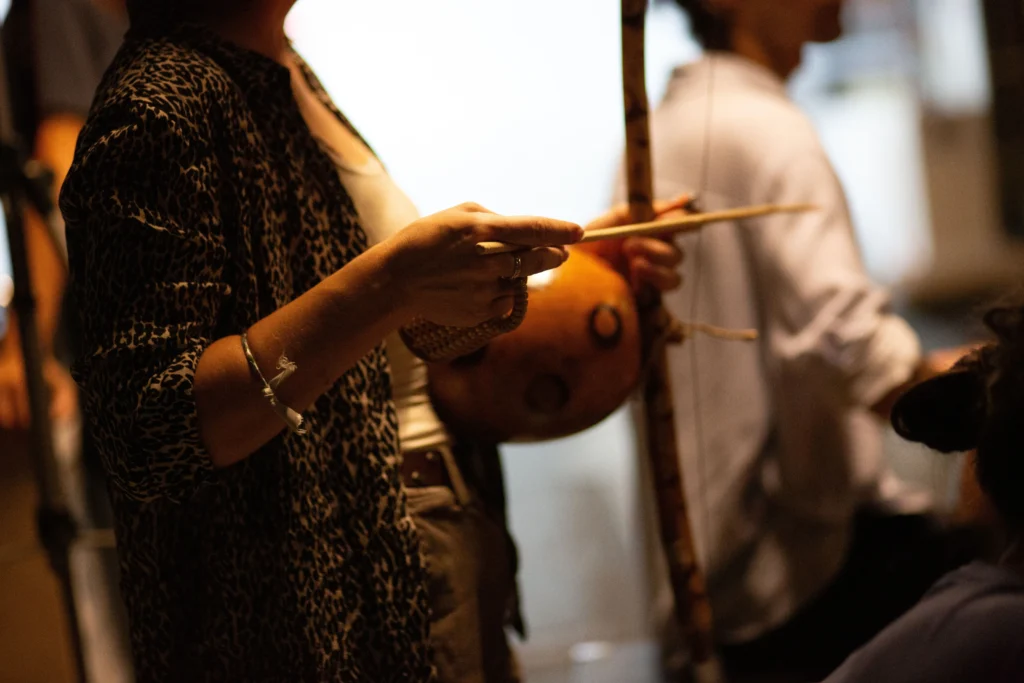
The player uses a wooden stick to strike the tensioned wire, while moving the gourd closer to or further away from their abdomen to alter the resonance and create distinctive sonic nuances.
Pressing the stone coin or coin against the wire modifies the pitch of the note, allowing the execution of traditional rhythms that transmit direct orders to the capoeira players in the center.
The master of the instrument is sovereign, as no player begins or ends the game without the express permission of the master responsible for playing the main berimbau in the roda (circle).
How does the instrument differ in the Angolan and Regional versions?
In Capoeira Angola, preserved by Mestre Pastinha, the percussion section uses three berimbaus with distinct tunings, creating a complex polyphony that favors more cunning, slow, and ground-based games.
Capoeira Regional, created by Mestre Bimba, prioritized objectivity, often using only one berimbau accompanied by two pandeiros to dictate the accelerated rhythm of the attack sequences.
While the Angolan style values continuous ancestral rhythms, the regional style uses specific beats like São Bento Grande to accelerate the dynamics of dodges and acrobatic strikes.
Recognizing The importance of the berimbau in capoeira. It involves identifying these structural nuances, understanding how the tuning of the gourd alters bodily intention and the dialogue between the players.
Organizational Classification and Functions in the Percussion Group
| Name of the Berimbau | Gourd Dimension | Sound Recording / Tuning | Main Function in Battery |
| Gunga or Berraboi | Large Gourd | Serious and Profound | Leads the rhythm section and commands the circle. |
| Middle or Patriarch | Medium Gourd | Intermediate / Medium | Reverse the rhythm of the Gunga and sustain the cadence. |
| Viola or Violinha | Small Gourd | High-pitched and shrill | Performs improvisations, variations, and sonic flourishes. |
Why do berimbau rhythms alter the style of play?
Each touch on the wire represents a specific musical code that determines the rules of the game, the speed of the movements, and the expected interpersonal attitude of the two players.
Read more: Berimbau: History, Techniques and Curiosities of the Capoeira Icon
The Angola rhythm demands a low and studied game, while the Iúna rhythm is reserved exclusively for demonstrations by masters and trained students performing complex acrobatic movements without physical contact.
Rhythms like "Cavalaria" historically served to warn of the approach of the military police during the prohibition of capoeira, demonstrating the tactical usefulness of music in protecting urban practitioners.
Consult the historical collection maintained by National Institute of Historic and Artistic Heritage (IPHAN) to examine the registration of the capoeira circle as cultural heritage of Brazil.
What are the components and the art of refining a gourd?
Handcrafted construction requires careful selection of the wood for the rod, usually biriba or candeia, which needs to offer flexibility and physical strength to withstand the tension of the steel wire.
The calabash, the fruit of the calabash tree, properly dried and hollowed out, acts as a natural resonance chamber and must be precisely sized to achieve the acoustic note desired by the professional player.
Learn more: Agogô: The Percussive Melody of Samba de Roda and Capoeira
The caxixi, a small rattle made of woven straw with seeds inside, is held by the same fingers that hold the drumstick, adding a snapping percussive effect with each strike on the wire.
Learning to tune the instrument develops the capoeira practitioner's auditory sensitivity, reinforcing how the The importance of the berimbau in capoeira. It combines the physics of materials with ancestral knowledge transmitted orally.
When did capoeira music become an intangible cultural heritage of humanity?
In 2014, the United Nations Educational, Scientific and Cultural Organization recognized the Capoeira Circle and the Craft of the Masters as Intangible Cultural Heritage of Humanity.
This international recognition highlighted the vital role of Afro-Brazilian musicality, positioning the berimbau as the central symbol of resistance, identity, and preservation of the memory of enslaved peoples.
Read more: Berimbau: The Sound of Capoeira and Afro-Brazilian Resistance
Contemporary schools in hundreds of countries teach the Portuguese language through ritual songs, spreading the sound of the musical bow across all continents of the globe.
Explore the safeguarding reports and cultural conventions published by UNESCO in Brazil to understand global programs for protecting ancestral musical traditions.
Frequently Asked Questions (FAQ)
Can anyone play the Gunga berimbau in a roda (circle)?
Traditionally, the Gunga berimbau is played by the oldest master or the highest-ranking capoeirista present, as he is responsible for setting the rhythm for the entire roda (capoeira circle).
Where did the berimbau, used in Brazilian territory, originate from?
The musical bow has African origins, deriving from ancestral instruments brought by the Bantu peoples, such as the mbulumbumba, and was adapted and reconstructed in Brazil during the colonial period.
How do I get a clean sound when playing for the first time?
It is necessary to position the coin with the correct pressure against the wire, synchronize the movement of the stick with the rattle, and keep the gourd at the proper distance from the abdomen.
What is the difference between a berimbau with a hard and a berimbau with a flexible bow?
A flexible bow makes bending easier when assembling the instrument, while a stiffer bow ensures greater tension in the wire and superior sound volume during performances.
Understanding The importance of the berimbau in capoeira. It reveals that the instrument is the true beating heart of this age-old art. By uniting rhythm, ancestry, and physical discipline, the sound of the berimbau continues to guide generations of practitioners, keeping the flame of Brazilian popular culture alive.
