
The importance of musical toys in cognitive development.
THE The importance of musical toys In child development, it goes far beyond mere entertainment, acting as a fundamental catalyst for neuroplasticity and early cognitive learning.
Advertisements
Structured auditory stimuli during early childhood strengthen complex neural connections, promoting integration between the brain hemispheres responsible for logical reasoning, language, and fine motor coordination.
Understanding the science behind sound playfulness allows parents and educators to select appropriate instruments, transforming playtime into valuable opportunities for sustainable intellectual growth.
Analyzing the neurological impacts of these stimuli helps families make informed decisions, investing in educational tools that build a solid foundation for the entire school life.
How do auditory stimuli transform children's brains?
Regular exposure to varied rhythms and timbres stimulates the production of synapses in the audiological and prefrontal areas of the developing brain.
Advertisements
When a baby manipulates a rattle or xylophone, the brain simultaneously processes tactile, visual, and auditory information, continuously strengthening the corpus callosum.
This sensory integration enhances working memory, the ability to concentrate for extended periods, and the recognition of abstract mathematical patterns from very early childhood.
Neuroscience research proves that playful musical practice accelerates the maturation of the auditory cortex, facilitating the rapid differentiation of phonemes and complex syllables.
Why does music accelerate language learning and literacy?
The brain's processing of musical structures shares the same neural networks dedicated to learning speech, reading, and interpreting texts.
Children exposed to songs and instruments develop greater phonological awareness, being able to identify rhymes, verbal rhythms, and intonations with superior accuracy and agility.
Playing sound sequences stimulates respiratory control and motor articulation of the mouth, preventing speech delays and pronunciation difficulties.
Understand the The importance of musical toys It helps integrate xylophones, drums, and keyboards into daily routines, preparing the home environment for natural literacy.
Comparison of Musical Toys and Their Cognitive Stimulation
| Musical Toy Type | Recommended Age Range | Main Skill Developed | Impact on the Child's Brain |
| Rattles and Maracas | 0 to 12 months | Cause and effect; auditory tracking | Strengthens tactile reflexes and auditory perception. |
| Xylophones and Metallophones | 12 to 36 months | Fine motor coordination; note differentiation | It stimulates spatial and visual reasoning. |
| Keyboards and Mini Pianos | From 3 years old | Sequential memory; manual laterality | It connects the two brain hemispheres. |
| Drums and Drum Kits | From 2 years old | Impulse control; rhythm and meter | Improves sustained attention and focus. |
What are the emotional and behavioral regulation benefits?
Playing a children's instrument expresses complex emotions that the child is not yet able to clearly verbalize during episodes of frustration or anxiety.
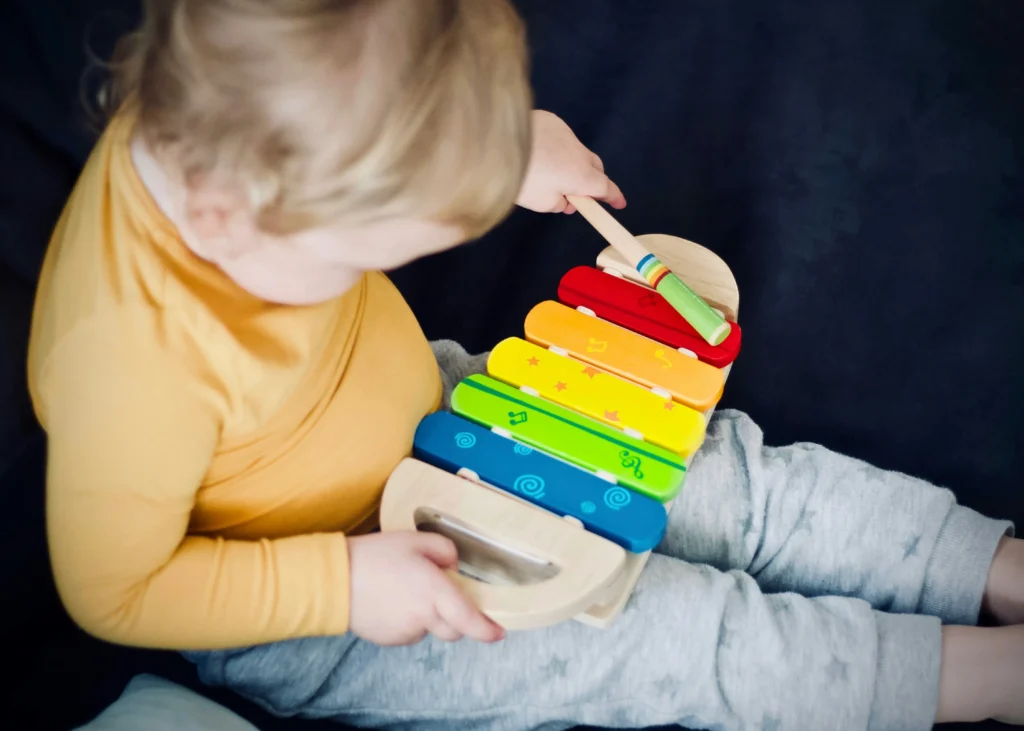
Rhythmic practice releases dopamine and endorphins in the body, reducing stress levels in children and promoting a lasting sense of well-being and calm.
Read more: How does music influence the development of children's motor coordination?
The act of waiting one's turn in group musical games naturally develops empathy, tolerance, and impulse control.
Consult the child development guide provided by Ministry of Health to align with official guidelines for motor and cognitive milestones in childhood.
When should each type of instrument be introduced into the daily routine?
In the first months of life, lightweight rattles with soft sounds are ideal for sparking curiosity without overloading the newborn's nervous system.
As children gain control of their hands, simple percussion instruments allow them to explore volume, rhythm, and the basic notion of cause and effect.
Learn more: The Best Musical Toys That Actually Develop Coordination
From the age of three, toys with keys or strings introduce concepts of musical pitch, challenging auditory memory and bilateral coordination.
Observing the child's reactions ensures the selection of challenging objects that will not cause rejection or fatigue due to excessive loud noise.
How can you create an enriching musical environment at home?
There's no need to invest in expensive equipment; the consistency and quality of human interaction outweigh the commercial value of the object used.
Sing along with your child as they explore sounds, encouraging them to imitate rhythms and creating fun sound stories during the afternoons.
Establishing screen-free moments where music is the main activity strengthens emotional bonds and stimulates creative imagination without visual distractions.
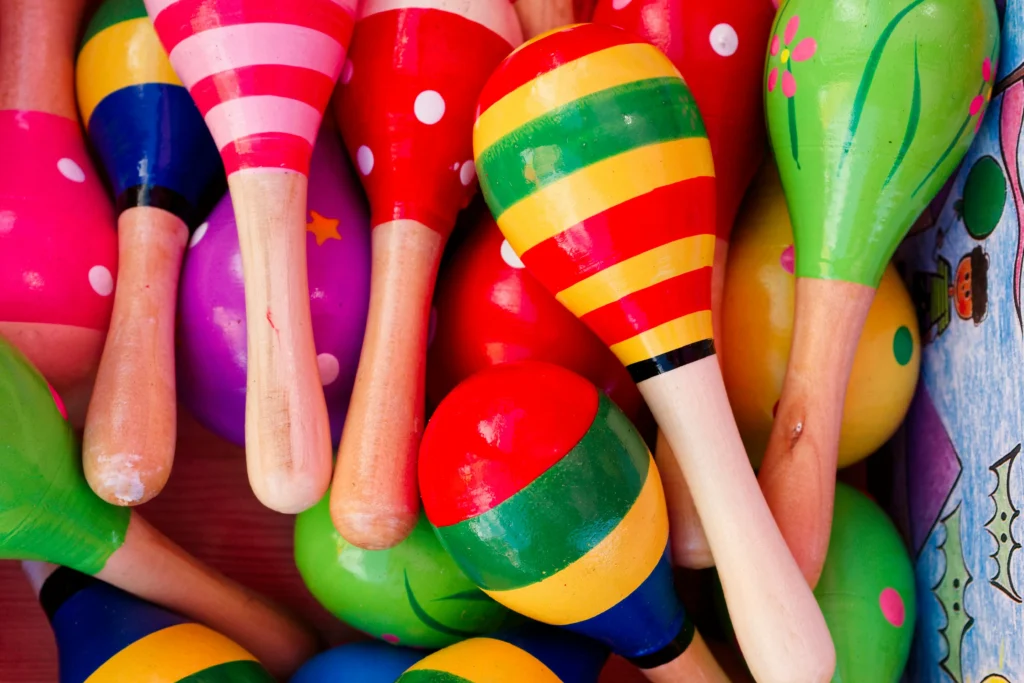
Strengthen the The importance of musical toys It transforms the home into a space of continuous discovery, where learning occurs in a light and enjoyable way.
Read more: Homemade sound toys: how to build them at home with children
Check out the scientific publications and guidelines from Brazilian Society of Pediatrics (SBP) to base their pedagogical choices on up-to-date medical evidence.
Frequently Asked Questions (FAQ)
Do electronic musical toys offer the same benefits as acoustic ones?
Acoustic instruments are preferable because they require direct physical action from the baby to produce the sound, while passive electronic models may limit actual motor exploration.
Can excessive noise damage a child's hearing?
Yes, toys with excessive volume and loud noises should be avoided; always opt for certified products with sound emission suitable for sensitive children's ears.
At what age does a child show an interest in rhythm?
Babies react to rhythms even in the womb and begin to actively respond to sound stimuli and songs from the first days of life.
How can you tell if a toy is safe for a given age group?
Always check for the Inmetro certification seal on the packaging, ensuring that the product does not contain small removable parts or harmful toxic paints.
Enjoy the The importance of musical toys This is a crucial step for parents who want to enrich their children's cognitive and emotional repertoire. Ensuring access to these playful resources transforms learning into a fun journey, promoting brain health and full development from the very first steps.
