
How to tune congas correctly: step by step
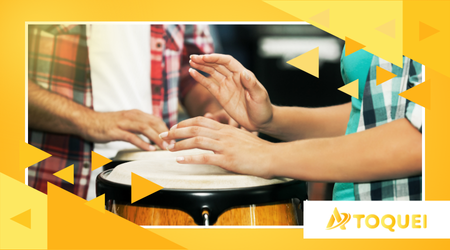
Mastering the tension of the congas requires auditory sensitivity and precise technique, including how to tune congas correctly, ensuring that the instrument projects the fundamental frequencies.
Advertisements
In this specialized 2025 guide, we will explore the fundamentals of tuning for the Quinto, Conga, and Tumbadora, respecting the physical properties of the leather and hardware.
Table of Contents
- Why does tuning impact durability?
- How to tune congas correctly in five steps.
- What are the ideal intervals between drums?
- When should you replace the instrument's skin?
- FAQ and final maintenance considerations.
Why uniform voltage defines sound quality.
The acoustic physics of congas depends on the symmetrical vibration of the drumhead, which must be subjected to the same pressure at all points of contact with the rim.
Uneven tension distorts the metal rim and creates "dead spots," where the sound loses sustain and the taps lose the definition characteristic of the Afro-Cuban style.
Maintaining balanced pressure preserves the integrity of the tuning pegs and screws, preventing the body wood from suffering unnecessary mechanical stress during performances.
Advertisements
Professionals prioritize harmonic equalization so that the instrument responds clearly both in recording studios and on open stages with high humidity variations.
How to tune congas correctly using the cross method.
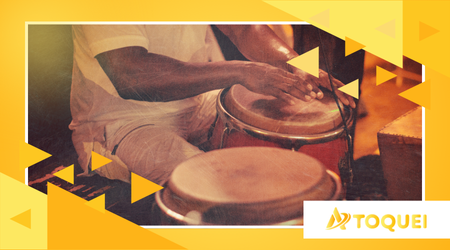
The safest technique for how to tune congas correctly It consists of tightening the nuts following a diametrically opposite pattern, similar to tightening vehicle wheels.
Start by lightly lubricating the screw threads with silicone grease to ensure smooth movement and avoid requiring excessive force from the wrench.
Turn each nut only half a turn at a time, circling the drum until the skin offers uniform initial resistance to a light touch in the center.
Use your fingers to press the edges near each screw; the tone produced should be identical at all ends to avoid annoying dissonant frequencies.
If you notice that one side is sharper, loosen it slightly before proceeding, ensuring that the hoop descends perfectly parallel to the edge of the wood.
To understand the science behind percussion frequencies, you can consult detailed acoustic studies on the portal of Acoustical Society of America, a global reference in the physics of sound.
What are the reference notes for the classic set?
Although tuning depends on personal taste, contemporary standards suggest perfect fourth or perfect fifth intervals between the drums for superior musicality.
The fifth drum, being the smallest, should be tuned to higher notes, usually C4 or D4, allowing the "slaps" to cut through the mix.
Read more: Best motor coordination exercises for drummers
The conga (medium) is generally positioned in G3, creating a solid foundation that perfectly complements harmonic instruments such as the piano and electric bass.
The Tumbadora, on the other hand, demands depth, being tuned in C3 or B2, providing that full-bodied bass that sustains the rhythm without becoming muddled by low frequencies.
Below, we present a technical table with the ideal specifications for each type of drum, considering genuine animal leather skins, which are very common in Brazil.
| Drum Type | Common Diameter | Suggested Note | Rhythmic Function |
| Fifth | 11 inches | Do (C4) | Solos and Repiques |
| Conga | 11.75 inches | Sol (G3) | Basic Gear and Pattern |
| Tumbadora | 12.5 inches | Do (C3) | Graves' Support |
How ambient temperature affects leather skin.
Animal hides are extremely hygroscopic, meaning they absorb moisture from the air and expand or contract as the local climate changes.
++ What are octave keys and their functions on the flute and saxophone?
On rainy days or in humid environments, the fibers relax and the tone naturally drops, requiring a tightening adjustment to recover the original sonic brilliance.
On the other hand, under the heat of stage spotlights or direct sunlight, the leather stretches and can reach dangerous tensions that cause the skin to suddenly tear.
The golden rule for how to tune congas correctly This always includes loosening the nuts after use, allowing the material to rest without constant pressure.
This practice extends the instrument's lifespan by years, preventing the wood from "shrinking" or the hardware from becoming permanently stripped due to continuous stress.
When is it necessary to replace the skin on your conga?
Even with rigorous maintenance, drumheads lose their natural elasticity over time with heavy use, resulting in a dull sound lacking vibrant harmonics.
++ Soprano, concert, tenor, and baritone ukuleles: which is best for beginners?
If you notice deep cracks, excessively thin areas, or if the leather no longer holds its tuning for very long, it's time for a replacement.
Synthetic leathers are modern alternatives for those seeking climate stability, but buffalo or cowhide is still preferred by purists due to its organic tone.
When installing a new drumhead, be sure to center it perfectly before beginning the tightening process, ensuring the drumhead edge is smooth and free of splinters.
Conclusion on the art of manual tuning
To understand how to tune congas correctly It transforms the percussionist into a true craftsman of sound, raising the technical level of any musical production or rehearsal.
Patience is the greatest virtue in this process, as minute adjustments make all the difference in sound projection and tactile comfort during rhythm performance.
Always remember to listen to the instrument from different distances, as the player's perception is distinct from the projection that reaches the audience or the microphone.
Keep your kit lubricated, respect the limits of the material, and always strive for maximum resonance, ensuring that your percussion is the beating heart of the music.
To deepen your knowledge about the history and different types of leather used, visit the Percussive Arts Society, the largest organization of percussionists in the world.
Frequently asked questions about tuning congas.
Should I use a wrench or a ratchet to adjust it?
A manual wrench is recommended because it offers better tactile control of the torque, preventing you from accidentally exceeding the strength limit of the bolts.
How long does it take for new skin to settle?
Generally, an animal hide takes between 48 and 72 hours of gradual tension and moderate use to fully stabilize its internal fibrous structure.
Can I tune the congas by ear or do I need a tuner?
Although electronic tuners help identify specific notes, a trained ear is essential for balancing the harmonics and tonal relationship between the drums in the set.
What to do if the nut is stuck?
Never force a stuck nut with pneumatic tools; apply a quality penetrating oil and wait a few minutes before attempting to loosen it with short movements.
Is it better to thin with dry or slightly damp skin?
Always tune the instrument when it is completely dry, as moisture alters its elasticity and can mask the actual tension the instrument can withstand.
