
How does the Japanese koto work?
Its arrival in the archipelago occurred in the 8th century, during the Nara period, as part of court music. gagaku, evolving from a Chinese prototype into a unique identity.
Advertisements
Summary
- What is the Japanese koto and its structure.
- How the instrument produces sound and its tuning.
- Why the koto remains relevant in modern Japan.
- What are the main execution techniques used?.
- Differences between the traditional koto and the bass koto.
- Frequently asked questions and external resources for study.
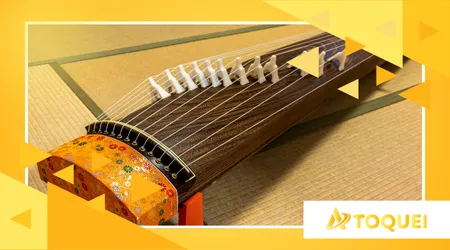
THE Japanese koto It is the national instrument of Japan, belonging to the family of movable-bridge zithers, possessing a long body traditionally made of paulownia wood.
Its arrival in the archipelago occurred in the 8th century, during the Nara period, as part of court music. gagaku, evolving from a Chinese prototype into a unique identity.
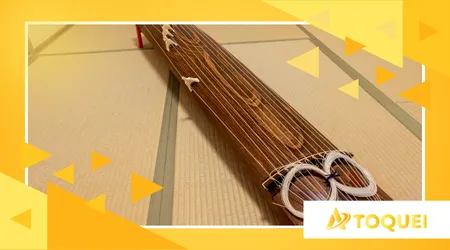
Measuring approximately 180 centimeters in length, the instrument symbolizes the body of a dragon, with parts named as head, back, and feet, reflecting ancient Japanese cosmology.
The construction requires skilled craftsmen, as the wood must be dried and treated to ensure the perfect resonance that defines the instrument's crystalline and melancholic timbre.
Advertisements
Unlike other stringed instruments, the Japanese koto uses mobile trestles called ji, which allow you to change the pitch of each string individually before or during performance.
How does the sound mechanics of the Japanese koto work?

Sound production in Japanese koto It occurs through plucking the strings with three picks (tsume) placed on the thumb, index, and middle fingers of the musician's right hand.
Read more: Typical of the Christmas Orchestra: Besides the Bell and the Violin
These reeds can have oval or square shapes, depending on the school of musical thought, such as... Ikuta-ryu or a Yamada-ryu, directly influencing the angle of attack.
While the right hand strikes the strings, the left hand applies precise pressure behind the bridges, a technique that allows for the creation of ornaments such as vibrato, glissando, and semitone changes.
This physical manipulation of the strings is what gives it Japanese koto His vocal expressiveness allows the musician to "bend" the notes to achieve traditional microtonal scales.
Currently, natural silk strings have given way to nylon or polyester, ensuring greater durability and tuning stability, especially in climates outside of Japan.
What are the most common tunings on the koto?
The versatility of Japanese koto resides in the ability to rearrange the bridges for different pentatonic scales, being the Hirajoshi The most common choice for classical and meditative compositions.
++ Discover the oud, an ancient Arabic instrument.
Another important setting is the scale. Kokin-joshi, frequently used in pieces that accompany singing, demonstrating the profound integration between instrumental music and Japanese poetry.
Below, we present a table with technical data on the fundamental scales and their applications in the updated 2026 repertoire for students and enthusiasts of Asian music.
Comparison of Traditional Scales for Koto
| Scale | Technical Name | Predominant Sentiment | Main Use |
| Hirajoshi | D scale | Melancholy and Calm | Classic pieces and meditation |
| Kokin-joshi | Modern Scale | Nobility and Rigor | Court music and poetry |
| Kumoi-joshi | Low Scale | Mystery and Depth | Ancient folklore themes |
| Gaku-joshi | Gagaku Scale | Grandeur | Official imperial ceremonies |
Why left-hand technique is vital
Master the Japanese koto It goes far beyond simply playing the right strings; the secret to mastery lies in the sensitivity and strength applied by the performer's left hand.
++ What is a bandoneon and what is its importance in Argentine tango?
By pressing the string, the musician alters the tension, raising the note by a whole tone or semitone, a technique known as oshide, essential to Japanese sound aesthetics.
This feature makes the instrument extremely dynamic, allowing a single string to produce various notes without the need for fixed frets, as is the case with a conventional guitar.
To better understand the complexity of these techniques and see examples of traditional scores, you can consult the official website of... Japan Foundation, which documents cultural preservation.
By 2026, new music schools in São Paulo and Curitiba have integrated the use of digital technology to map the exact pressure needed to achieve perfect tuning.
When the Japanese koto is used in modern music
Despite its ancient roots, the Japanese koto It has spanned centuries and today occupies a prominent place in unexpected genres such as jazz, progressive rock, and film soundtracks.
Contemporary composers use the instrument to evoke an atmosphere of "familiar strangeness," blending modern synthesizers with the percussive and organic attack of high-tension nylon strings.
The emergence of the 17-string "koto bass," developed by Michio Miyagi in the 20th century, allowed the instrument to take on lower harmonic functions in chamber music ensembles.
This innovation was fundamental for the Japanese koto could engage in dialogue on equal terms with Western instruments in symphony orchestras, while maintaining its relevance in the current global landscape.
International festivals of experimental music frequently invite koto soloists for performances that challenge the limits of acoustics, proving that the tradition is a living and ever-changing organism.
How to choose your first koto for beginners
Entering the universe of Japanese koto It requires a conscious investment, as the instrument demands specific care in its maintenance, especially regarding humidity and ambient temperature.
For Brazilian beginners, it is recommended to seek out second-hand instruments that have been inspected by specialized luthiers, ensuring that the wooden body does not have structural cracks that could compromise projection.
There are slightly smaller training versions that make it easier to transport and learn the first scales, although the sound does not have the same harmonic richness as a professional model.
It is also essential to acquire a set of ji (bridges) made of high-density resin, which offer better support for the strings and prevent slippage during more vigorous playing.
Guidance from a qualified instructor is essential, as body posture and hand positioning directly influence the prevention of repetitive strain injuries during practice.
Conclusion
THE Japanese koto It represents the perfect union between the visual art of fine woodworking and the technical complexity of a piece of music that has survived the relentless passage of time.
Whether through the classical compositions of the Edo period or the avant-garde experiments of 2026, this instrument continues to enchant listeners with its unique ability to express profound emotions.
Learning about its mechanics and history is the first step to appreciating the richness of Japanese culture, which values the silence between notes as much as the sound itself.
If you want to explore more about the world of oriental instruments, the website Traditional Japanese Music The Metropolitan Museum offers a detailed catalog of historical instruments.
Frequently Asked Questions
What is the difference between Koto and Guzheng?
Although the Japanese koto originate from guzheng Chinese, it has thirteen strings and uses different picks, in addition to having unique left-hand pressure techniques.
Is it difficult to learn to play the koto?
The basic technique of Japanese koto It can be learned in a few months, but mastery of ornamentation and tonal sensitivity requires years of dedicated practice and theoretical study.
What material are the blades made of?
The picks for the Japanese koto They are traditionally made of ivory or bamboo covered in leather, but today there are sustainable options in high-performance plastic and resin.
How should I store my instrument?
Keep your Japanese koto Always store horizontally, preferably inside a padded cover, and in locations with controlled humidity to prevent the paulownia wood from warping.
