
How to deal with a child's disinterest during music lessons.
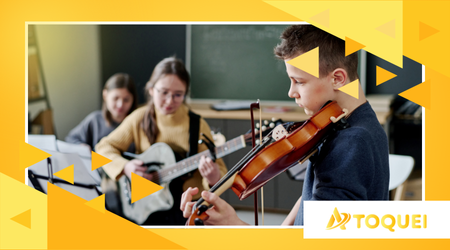
THE The child's lack of interest during music lessons. It is a common challenge that requires pedagogical sensitivity, patience, and playful strategies to be successfully overcome.
Advertisements
In this guide, we will explore the causes of this disconnect and how to transform learning into something enjoyable.
Summary:
- Why does a lack of engagement occur?
- How to identify the early signs of boredom?
- Which teaching methods are most effective in 2025?
- How does neuroscience explain children's musical learning?
- When is the right time to change instruments?
- FAQ and Conclusion.
Why does a child lose interest during music lessons?
The loss of enthusiasm often arises when the content becomes excessively theoretical or disconnected from the sound reality that the child consumes daily.
Often, the The child's lack of interest during music lessons. It reflects a rigid methodology that ignores the need for creative exploration and student autonomy.
Advertisements
It's crucial to understand that a child's brain seeks dopamine through play. If the lesson focuses solely on complex musical scores, the emotional connection with sound quickly disappears.
Modern teachers prioritize the repertoire that the child enjoys, integrating technique organically. This prevents studying from becoming a burdensome obligation without immediate practical meaning.
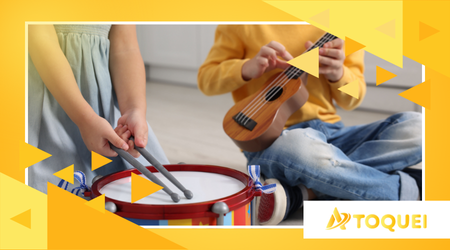
How to identify signs of discouragement in class.
Observing body language is the first step. If the child avoids playing the instrument at home, there may be an emotional or technical block that hasn't been resolved during lessons.
Another clear sign of The child's lack of interest during music lessons. It's the lack of questions. A curious child interacts, while an unmotivated one only mechanically executes commands.
Changes in behavior, such as irritation before class time or frequent excuses for not participating, indicate that the activity has lost its playful and enjoyable character for her.
Read more: Is the saxophone suitable for children? A guide for curious parents.
Parents and educators should maintain an open dialogue. Sometimes the problem isn't the music itself, but the lesson format or the lack of small, achievable challenges.
What are the most attractive methodologies in 2025?
Currently, the use of assistive technologies and gamification has revolutionized music education.
Apps that turn scales into video game challenges help combat the The child's lack of interest during music lessons..
Established methods, such as Suzuki and Dalcroze, remain relevant by focusing on listening and body movement even before reading musical notes, respecting the natural cognitive development of childhood.
Personalized learning is the strongest trend this year. Teachers who allow students to create their own melodies foster a very powerful sense of authorship and pride.
Studies indicate that group classes, where there is social interaction and exchange of experiences among peers, drastically reduce the The child's lack of interest during music lessons. and increase retention.
++ Homemade sound toys: how to build them at home with children
How neuroscience explains musical motivation.
Learning music stimulates the corpus callosum, increasing communication between the cerebral hemispheres.
However, stress blocks this process, generating the The child's lack of interest during music lessons..
According to World Health Organization, Mental well-being in childhood is linked to activities that promote emotional expression and control, with music being an essential tool in this development.
When a child achieves a small goal, the brain releases oxytocin. This reward cycle is what keeps interest alive in the long term, combating the frustration of technical learning.
It is vital that the learning environment be welcoming. Stressful environments or excessive demands for perfect performance stifle creativity and distance the student from the spontaneous desire to play.
++ How does the Suzuki method work for children?
Not every child adapts to the piano or guitar right away. The child's lack of interest during music lessons. It could simply be a sign of incompatibility with the chosen instrument.
Below, we present a table with data on instrument selection based on age ranges and motor coordination, aiming to assist parents in making the right decision regarding transition or initiation.
Instruments Recommended by Maturity
| Age Range | Suggested Instrument | Skill Developed | Level of Complexity |
| 3 to 5 years | Percussion and Recorder | Basic Rhythm and Breathing | Low |
| 6 to 8 years | Ukulele or Piano | Bilateral Coordination | Average |
| 9 to 11 years old | Violin or Guitar | Typing and Posture | High |
| 12+ years | Metal/Wood Wind Instruments | Lung Capacity | Advanced |
How can parents help in daily life?
The role of the family is not to supervise, but to encourage. Creating a weekly "show time" at home values progress and reduces anxiety. The child's lack of interest during music lessons..
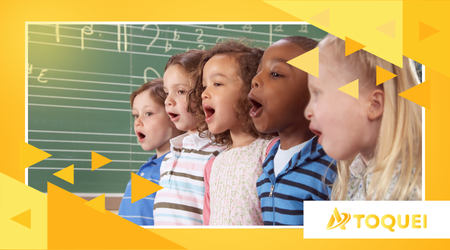
Listening to a variety of music together broadens one's auditory repertoire. When a child recognizes a sound they like, they feel more inclined to reproduce it on their own instrument during lessons.
Avoid comparing your child's progress to that of other children. Each neurological development process is unique, and the focus should always be on the journey, not just the end result.
If the The child's lack of interest during music lessons. If the habit persists for months, consider taking a break. Sometimes, a short period away renews curiosity and the desire to return.
Conclusion
Dealing with The child's lack of interest during music lessons. It requires a subtle balance between discipline and fun. The main goal should always be the development of a sensitive individual.
By adopting modern methods, respecting biological rhythms, and maintaining an encouraging environment, it is perfectly possible to rekindle the sparkle in the eyes of those discovering the infinite universe of sounds.
FAQ – Frequently Asked Questions
Is it normal for a child to want to give up after three months?
Yes, after the initial enthusiasm, the technical learning curve becomes steeper. This is the critical moment where playful support should be intensified to prevent early dropout.
Does forcing daily practice help or hinder?
In most cases, it's disruptive. Ideally, you should set small goals of 10 to 15 minutes, focused on music that the child truly enjoys, to create a natural and positive habit.
Does the teacher influence the lack of interest?
The connection between student and teacher is fundamental. If there is no empathy or if the teaching method is too rigid for the child's profile, changing teachers may be necessary.
How can you tell if it's just laziness or a lack of aptitude?
Musical aptitude is built. What we call laziness is usually fear of making mistakes or boredom. Changing the teaching approach often reveals the true potential hidden behind the discouragement.
For more information on the impact of art on child development, visit the portal of Ministry of Education, which offers guidelines on arts education in schools.
