
Comparison: compact pedalboards vs. advanced pedalboards for guitar
The clash between compact pedalboards vs. advanced pedalboards This represents one of the most strategic decisions for guitarists looking to optimize their tone, mobility, and budget in 2026.
Advertisements
The evolution of digital signal processors (DSPs) has enabled smaller-sized equipment to deliver amplifier simulations that were previously restricted to high-end systems.
On the other hand, complete workstations continue to dominate professional stages due to their extreme capacity for processing and routing complex signals.
This detailed technical analysis compares the processing power, user interface, physical connections, and economic viability of each category to guide your choice without error.
What defines the audio processing capabilities of modern digital modelers?
The fidelity of a virtual amplifier depends directly on the algorithm's update rate and the DSP chip's ability to calculate complex nonlinear equations in real time.
Advertisements
The internal components process the dynamics of the picking technique, the harmonic distortion of the simulated tubes, and the physical resonance of the acoustic cabinet chosen by the musician.
In top-of-the-line equipment, multi-core chips dedicate exclusive hardware to each effects block, avoiding noticeable latency or abrupt audio cuts.
This surplus of computational performance ensures dense reverb textures and modulated delays that interact organically with the instrument in a way identical to the traditional analog ecosystem.
Artificial intelligence and profiling technologies have revolutionized the industry in recent years, enabling the cloning of physical amplifiers with surgical precision directly on the device.
This technology demands high-speed components, creating a clear dividing line between the computing power of the most robust platforms and the basic entry-level models.
How do the physical interface and workflow differ between the two segments?
The sound editing experience changes drastically when we alter the chassis size and the layout of the physical controls on the product's front panel.
The dispute between compact pedalboards vs. advanced pedalboards It reveals distinct approaches to industrial design focused on user profiles with entirely different stage needs.
Smaller models prioritize simplified displays and menus based on multi-function buttons, requiring more internal navigation to adjust secondary equalization or gain parameters.
To overcome this physical limitation, manufacturers are developing mobile applications via Bluetooth that facilitate the creation of sound banks directly on the smartphone screen.
Professional systems, on the other hand, boast large, colorful touchscreens and strips of digital scribbles above each foot pedal.
This visual engineering eliminates the need for external computers on stage, allowing for drastic changes to gain, signal paths, and block assignments in the middle of a live performance.
To explore detailed studies on digital audio calibration, electronic signal processing, and international standards for musical acoustics, consult the technical library of [website/resource name]. Audio Engineering Society (AES).
What are the differences in connections and stage resources between the two formats?
Rear connectivity determines how your equipment will communicate with the rest of the audio ecosystem on stage, in the studio, or during home recordings.
Professional systems offer multiple stereo effects loops, allowing integration of external analog pedals at any point in the configured digital signal chain.
The presence of native balanced XLR outputs eliminates the need for direct injection boxes, reducing electromagnetic noise in long cables connected to the main mixing console.
Smaller models typically only have unbalanced 1/4" (P10) outputs, focusing on simplified setups where the musician connects directly to a conventional guitar amplifier.
To understand the market data for the musical instrument sector in Brazil and analyze the import guidelines for electronic audio components, access the portal of... National Association of Musical Instrument and Audio Manufacturers (ANAFIMA).
Technical Comparison: Hardware Specifications and Real-World Performance
Analyzing hardware metrics without commercial bias is the only sure way to identify which architecture meets your actual daily work or study needs.
The table below consolidates the average technical specifications found in the global market, serving as a benchmark for your financial planning:
| Technical Analysis Vector | Compact pedalboards (e.g., Line 6 HX Stomp, Ampero II) | Advanced pedalboards (e.g., Quad Cortex, Helix Floor) | Practical Impact on the Guitarist's Tone |
| Processor Architecture (DSP) | Single or dual medium-speed core | Multiple high-performance SHARC cores | It determines the complexity and richness of the modulation effects. |
| Impulse Response (IR) Resolution | Generally limited to 1024 sampling points. | Native support for 2048 points or more. | Defines the fidelity of the cabinet and microphone simulation. |
| Number of Footswitches | 3 to 4 buttons with double-click controls | 8 to 12 buttons with individual digital displays | Changes the ease of triggering effects on stage. |
| Integrated USB Audio Interface | 4 audio input and output channels | Up to 8 independent channels for reamp. | It influences the flexibility of recording in a home studio. |
Technical data proves that the reduced versions do not sacrifice the fundamental quality of the basic algorithm, but limit the number of simultaneous effects due to the thermal and processing limitations of the smaller chip.
Read more: Comparison: Analog vs. Digital Distortion Pedals
It is up to the musician to assess whether the complexity of their repertoire requires gigantic signal chains or whether essential blocks suffice for their needs.
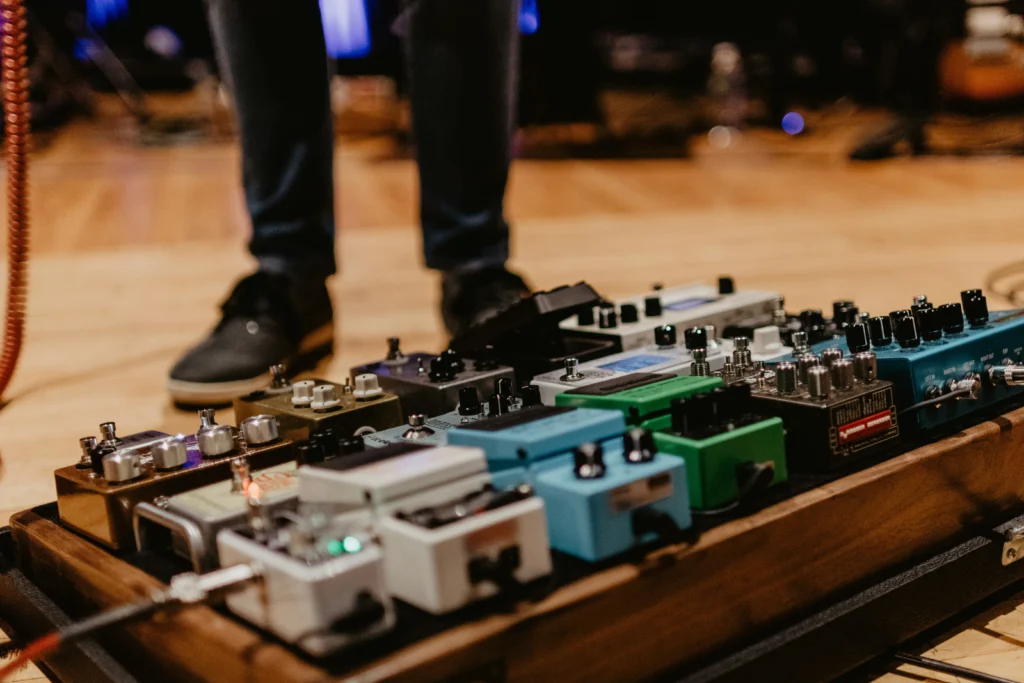
Why has heavy portability transformed the transportation habits of professional musicians?
The logistical cost of shipping heavy equipment on domestic air tours has turned extreme portability into a compelling selling point for professional musicians.
Carrying a complete ecosystem of instruments in your carry-on bag eliminates excessive baggage fees and prevents the tragic loss of expensive work tools.
Learn more: Is it worth buying a pedal board or separate pedals?
Smaller equipment operates with simplified power supplies and occupies minimal space on small stages in bars and small corporate events.
This physical convenience balances the scales against the brute power of larger systems, creating a legion of advocates for the compact and minimalist work philosophy.
Defining the Perfect Choice for Your Guitar Setup
Technological convergence has leveled the playing field for basic sound quality in the market, shifting the purchasing decision to factors such as usability, stage flexibility, and immediate budget availability.
Understanding your actual routing needs prevents excessive spending on resources that would otherwise remain unused on your everyday audio equipment's chip.
Learn more: Best looping pedals for acoustic guitar
If your focus involves logistical simplicity, agile transport, and the use of mobile apps for quick editing, the smaller format will deliver exceptional results while keeping your backpack lightweight.
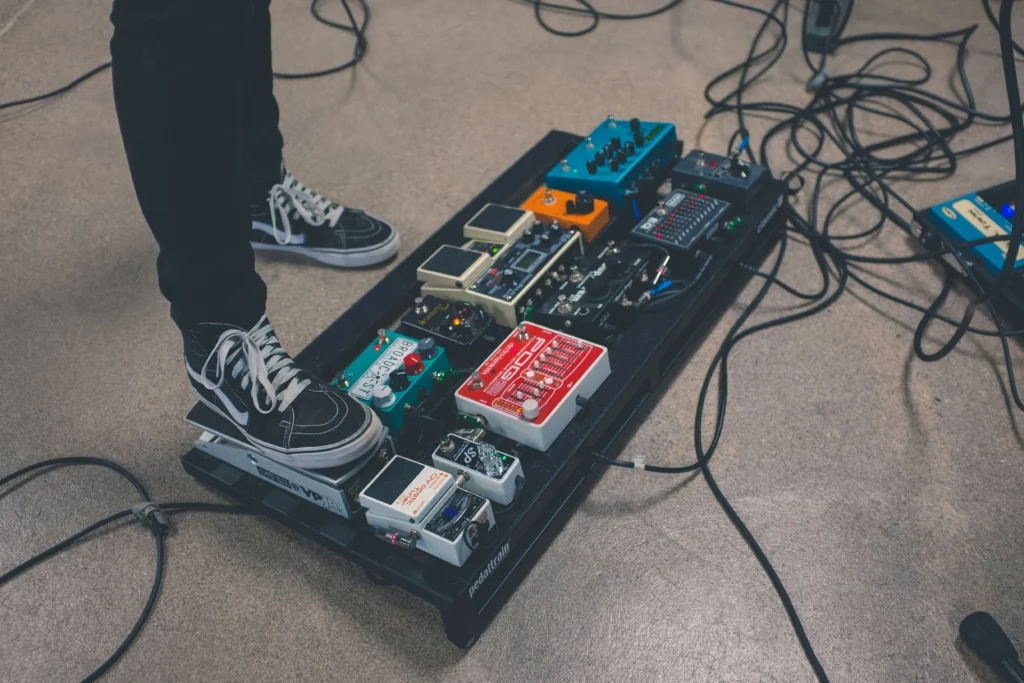
For guitarists who perform on large stages and require complete real-time control without external assistance, investing in full-featured sound systems remains the ultimate professional path.
Frequently Asked Questions (FAQ)
Can I use a compact pedalboard connected directly to the mixing console at the show?
Yes, modern compact models feature speaker cabinet simulations and configurable line-level outputs, ideal for direct connection to professional PA systems.
It is recommended to use a balanced cable or external Direct Box to avoid static induced by the electrical network at the event venue.
What does the capture or profiling technology present in high-end footswitches mean?
Profiling differs from traditional modeling because it does not attempt to mimic the theoretical behavior of an amplifier through fixed programming codes based on old electronic schematics.
The device sends test signals through the actual amplifier and digitally analyzes the exact response obtained, precisely cloning the physical timbre.
How many simultaneous effects can I run on an entry-level portable processor?
Most portable platforms support between six and nine simultaneous processing blocks on a single structured signal line.
This limit varies depending on the processing power consumption of each chosen effect, with long spatial reverbs and complex amplifier modelers consuming more resources than compressors.
Is it possible to update the factory sounds by downloading files created by other guitarists?
Yes, both market segments have active global digital communities where users share cabinet presets and impulse responses, either for free or for a fee.
These updates occur via USB connection and continually expand the palette of sounds available on the hardware over the years.
