
What are octave keys and their functions on the flute and saxophone?
Read the text and learn more about it. octave key It is the first step towards mastering melodic range and tonal versatility on modern wind instruments.
Advertisements
Summary
- What is the octave key?
- Mechanism and physics of sound
- Application to the saxophone and flute.
- Differences between models and brands
- Technical comparison table
- Tips for preventive maintenance
- Frequently Asked Questions (FAQ)
What is the octave key and what is its technical importance?
THE octave key It consists of a metal mechanism designed to facilitate the transition between registers, allowing the musician to reach high notes with less lip effort.
In woodwind instruments, this device alters the pressure point within the air column, forcing the vibration to split and double the frequency of the note.
Without this feature, the instrumentalist would need to apply excessive embouchure pressure, which would compromise intonation and timbre quality during faster or more complex performances.
Mastering the use of octave key It requires fine motor coordination, as the activation must be perfectly synchronized with the fingering of the left hand to avoid unwanted noises.
Advertisements
++Review of MIDI controllers for music production.
By 2025, key systems have evolved to offer greater ergonomics, allowing both beginner and professional musicians to achieve octave ranges with smoothness, precision, and tactile comfort.
How does the physics behind this mechanism work?
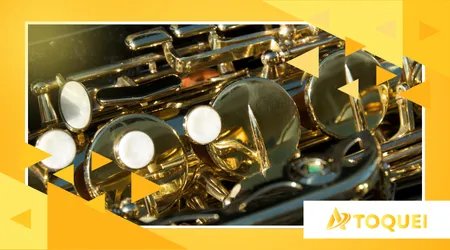
The primary function of octave key It involves opening a small hole, called a "vent," which interrupts the fundamental wave and stimulates the production of the second natural harmonic.
By releasing a small amount of air at a strategic point in the tube, the mechanism prevents the low note from resonating, favoring the frequency that sounds an octave higher.
Contrary to what many people think, the octave key It doesn't "create" the high-pitched sound, but acts as a physical facilitator that organizes the internal pressure so that the harmonic emerges.
++World Saxophone Day: Learn about the history of the instrument.
The precision of this hole's placement is mathematically calculated by manufacturers to ensure that the resulting note is perfectly in tune with the rest of the instrument's chromatic scale.
What are the differences in usage between the saxophone and the flute?
On the saxophone, the octave key It is operated by the left thumb and uses an automatic system that alternates between two different holes, depending on the note being played.
In the transverse flute, the concept is slightly different, as the musician uses the "half-hole" or specific register keys to reach the higher notes of the third octave.
Although the ultimate goal is the same, the ergonomics on the saxophone are more centralized, while on the flute, control of the air column requires more active participation from the embouchure.
It is essential to understand that the octave key The modern saxophone is a triumph of mechanical engineering, allowing for immense interval leaps with a simple movement of the thumb.
++How to properly clean and maintain a clarinet
To deepen your knowledge of the physics of wind instruments, you can consult the technical guidelines of... Yamaha Musical of Brazil, a global benchmark in the sector.
Why is maintaining the octave shoe critical?
The shoe associated with octave key It is one of the smallest parts of the instrument, but any leakage in it can completely prevent the playing of low and mid-range notes.
The accumulation of moisture or debris in the small ventilation hole causes "stuck notes" or a shrill sound, hindering the musician's professional performance and daily practice.
Clean the mechanism regularly. octave key It prevents the pad from sticking to the metal, ensuring that the instrument's response is instantaneous during fast and technical musical passages.
Experienced musicians periodically check the spring tension, ensuring that the closure is airtight and that there are no mechanical gaps that could generate metallic noises during performance.
Technical Comparison: Saxophone vs. Flute
| Feature | Saxophone (Alto/Tenor) | Transverse Flute |
| Mechanism | Automatic (Thumb) | Manual/Embocadura |
| Number of Holes | 2 registration holes | Multiple vent points |
| Physical Effort | Bass (Mechanical) | Medium (Air Control) |
| Maintenance | Changing small shoes | Top shoe adjustment |
| Tonal Precision | High stability | Dependent on the embouchure |
Which type of mechanism is most efficient currently?
Currently, the system of octave key The tilting mechanism is the gold standard because it minimizes friction and allows for a smooth transition between the mid-range and high registers.
Elite manufacturers invest in lighter metal alloys for the rods, reducing movement inertia and providing a much faster tactile response for the saxophonist.
The choice of material for the shoe in octave key, Materials like synthetic leather or "Star" type synthetic material directly influence durability and quiet typing.
Assess the height of the opening of the octave key It's a fine-tuning process that should be done by a specialized luthier, ensuring the perfect balance between tuning and projection.
How can you improve your register transition technique?
To master the octave key, Practice slow interval exercises, focusing on the constant pressure of the air column while your thumb makes the smooth actuating motion.
Avoid pressing the mechanism with excessive force, as this causes strain on your left hand and may misalign the metal rods of your saxophone or flute over time.
The secret to a octave key Efficiency lies in the economy of movement, keeping the thumb always close to the control button to minimize mechanical reaction time.
Record your practice sessions to identify any "breaks" in the sound during octave changes, adjusting the coordination between the tongue, fingers, and diaphragm support.
Conclusion: The impact of technology on performance
THE octave key It transformed the history of wind instruments, allowing composers to explore tessituras that were previously impossible to execute with clarity and technical agility.
Whether in jazz, classical music, or pop, the flawless functioning of this component is what guarantees the expressiveness and characteristic brilliance that we so admire in great soloists.
Investing time in understanding and preserving octave key It is, fundamentally, about investing in the quality of your sound and the longevity of your precious musical instrument.
To learn more about the history and components of brass and woodwind instruments, visit the website of... Selmer Paris, the ultimate authority on saxophones.
FAQ: Frequently Asked Questions about Octave Keys
1. What happens if the octave key is leaking?
If there is a leak in octave key, The low notes will either fail or sound an octave higher unintentionally, making the instrument unstable and very difficult to control.
2. Is it possible to play high notes without using the key?
Yes, through the technique of harmonics and super-high notes (altissimo), but the use of octave key It is the standard method for ensuring accurate tuning in the common register.
3. Why does my octave key make a noise when it closes?
The cork or cushioning felt is probably worn out, causing direct impact with the metal, which requires simple maintenance by a trusted luthier.
4. Is the octave key the same on all saxophones?
Although the principle is identical, the mechanical design varies between soprano, alto, tenor, and baritone saxophones to compensate for the different dimensions of the instrument's body and bore.
5. How do I clean the octave key hole?
Use absorbent paper specifically designed for cleaning shoes or a soft-bristled brush, taking extreme care not to puncture the delicate material of the inner seal.
