
Ibanez Tube Screamer vs Boss SD-1 Overdrive Pedals |
Evaluate the sound of Ibanez overdrive pedals In direct comparison to the classic Boss SD-1, the Super Overdrive is an essential step for guitarists looking to perfect their tone.
Advertisements
Both of these devices have dominated professional pedalboards for decades, offering distinct solutions for driving tube amplifiers and shaping mid-range frequencies in styles ranging from blues to metal.
Understanding signal clipping architecture, equalization behavior, and dynamic response to touch helps musicians choose the ideal tool for their musical needs.
We thoroughly analyzed the Tube Screamer and SD-1 circuits, detailing their practical applications, tonal differences, and selection criteria to ensure you make the right purchase without any room for error.
How does the clipping architecture differentiate the Tube Screamer from the Boss SD-1?
The main technical difference between the circuits lies in the method of clipping the audio signal, which is responsible for shaping the texture of the saturation delivered to the speakers.
Advertisements
The circuit of Ibanez overdrive pedals, The TS9 and TS808, represented by the classic TS9 and TS808, uses symmetrical clipping, clipping the sine wave identically at the upper and lower peaks.
This symmetrical approach produces a smoother, more velvety sound focused on the midrange, providing natural compression with excellent sustain during solos and rhythm parts.
On the other hand, the Boss SD-1 adopts asymmetrical clipping in its gain stage, resulting in a more aggressive, expressive saturation rich in odd harmonics.
Which pedal cuts the sound mix best in a live band?
Highlighting the guitar in the band's final mix requires a reinforcement focused on the mid-range frequencies between seven hundred and eight hundred hertz, a characteristic present in both circuits.
The Boss SD-1 features a slightly sharper midrange peak, accompanied by a less severe cut in the low frequencies at the beginning of the signal chain.
This extra treble presence in the Boss pedal ensures a more pronounced pick attack, making it ideal for British amplifiers with a naturally full-bodied sound.
The Tube Screamer compresses the audio more, attenuating excessive bass and delivering a smooth tone that fits perfectly with clean-sounding American amplifiers.
Comparative Analysis of Technical Specifications and Tonal Behavior
| Tonal and Technical Parameter | Ibanez Tube Screamer (TS9/TS808) | Boss SD-1 Super Overdrive |
| Clipping Type (Saturation) | Symmetrical (Equal diodes in the loop) | Asymmetrical (Two diodes on one side, one on the other) |
| Average Frequency Response | Pronounced boost at 723 Hz with compression. | Boost focused on mid-high frequencies with increased brightness. |
| Preservation of Graves | Sharp cut in bass frequencies below 100 Hz | Moderate reduction of bass, while maintaining impact. |
| Signal Bypass | Buffered Bypass (silent JFET) | Buffered Bypass (Traditional Boss Circuit) |
Why is the Tube Screamer the favorite boost for high-gain amplifiers?
Heavy rock and metal musicians use the Ibanez overdrive pedals with the gain control at minimum and the volume at the maximum usable level.
Read more: Is it worth buying a pedal board or separate pedals?
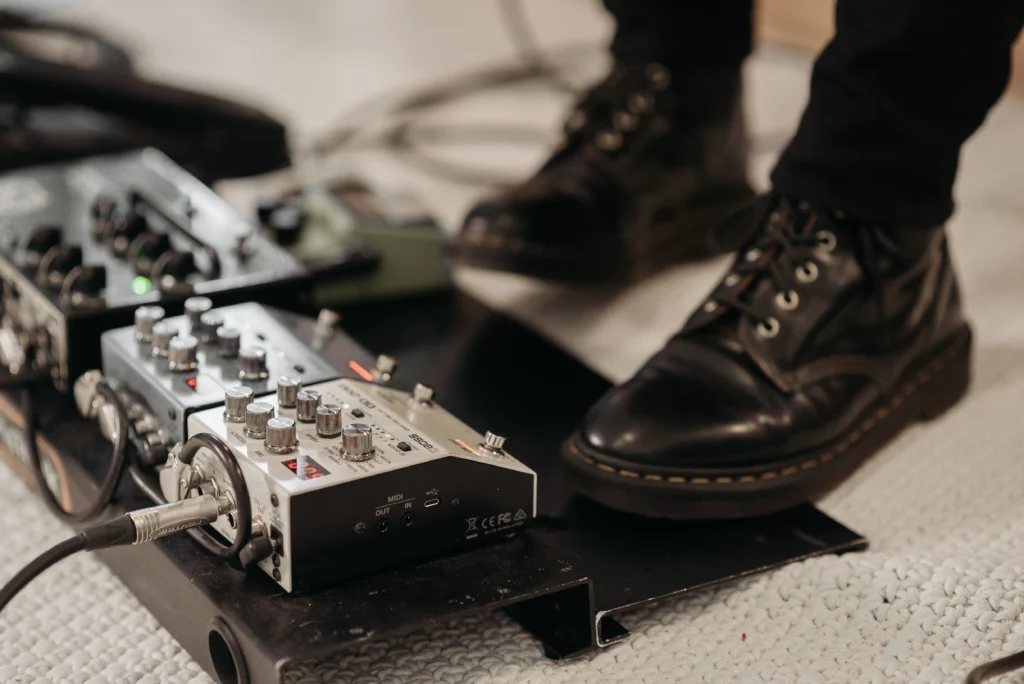
This setting cleans up the muddy bass from the amplifier's high-saturation channel, making the rhythm sound extremely tight, articulate, and fast for strumming.
The subtle compression of the operational amplifier chip adds sustain to solos, allowing notes to flow easily without adding excessive noise to the sound system.
Explore the specifications of electronic components and analog circuits documented on the pages of Ibanez Guitars to understand the technical construction of modern pedals.
When should you choose the Boss SD-1 over the Tube Screamer line?
The Boss SD-1 stands out as the most versatile option when a guitarist is looking for a primary gain pedal over the clean channel of an amplifier.
Its dynamic saturation responds more precisely to the guitar's own volume control, allowing you to clean up the sound simply by softening the intensity of the musician's playing.
Learn more: Delay Pedal Review: Boss vs TC Electronic
Styles that demand a more rustic and dry tone, such as classic hard rock, find in the asymmetrical circuit a superior and striking harmonic bite.
Furthermore, the investment value of a Boss pedal is usually more affordable, delivering extreme durability in a reinforced metal casing to withstand demanding tours.
How do I integrate these overdrives with other gain pedals on my pedalboard?
Positioning the overdrive pedal before distortion or fuzz pedals helps to focus the signal, refining the frequencies before the sound is completely crushed.
Stack the Ibanez overdrive pedals With another transparent pedal, it's possible to create different saturation levels, increasing the guitarist's tonal versatility on stage.
Read more: Comparison: Analog vs. Digital Distortion Pedals
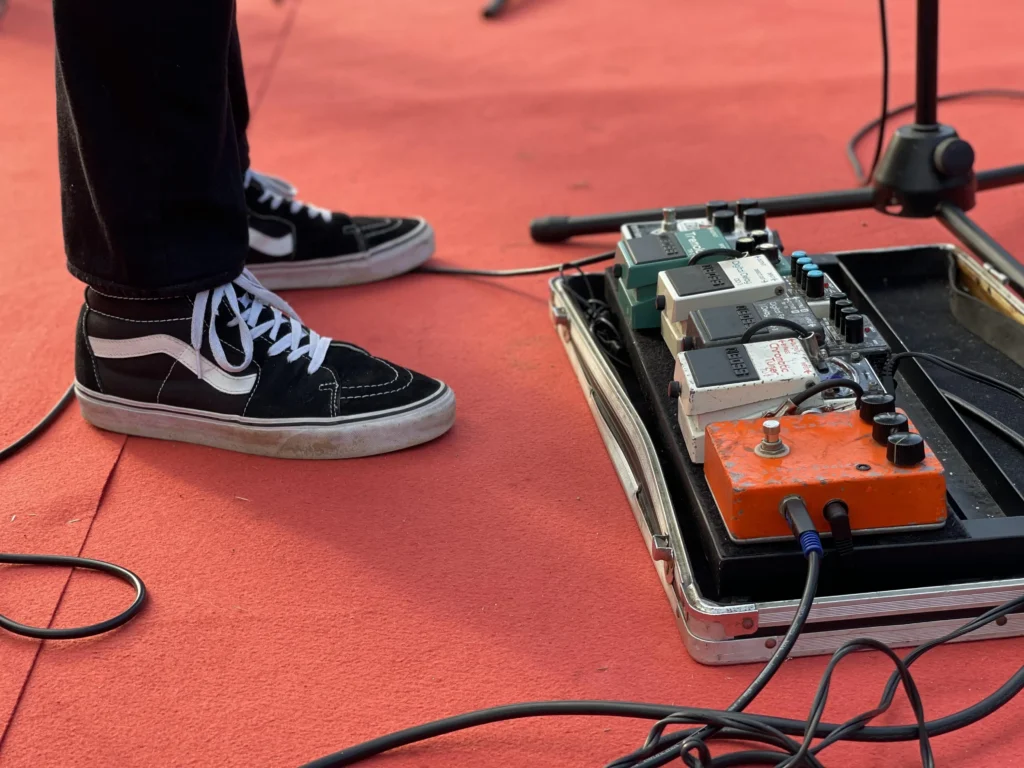
Always connect the pedal to isolated nine-volt DC power supplies to avoid ground loops and unwanted hum in the signal.
Consult the database of technical manuals and equipment compatibility guides maintained by [Company Name]. Boss Audio to optimize connections and prevent tone loss.
Frequently Asked Questions (FAQ)
Do the Tube Screamer TS9 and the TS808 sound exactly the same?
No, the TS808 has different output resistors that offer a slightly softer and less aggressive tone in the treble compared to the TS9.
Can I use the Boss SD-1 or TS9 on an electric bass guitar?
Yes, but both pedals cut the deep bass frequencies, requiring a blend pedal to maintain the instrument's original weight.
What does the word "overdrive" mean in the context of guitar pedals?
Overdrive simulates the natural saturation of a tube amplifier being pushed to its limit, maintaining the dynamics of the touch without crushing the signal.
Which of the two pedals works better with single-coil pickups?
The Tube Screamer usually pairs perfectly with single-coil pickups on Fender guitars, as it fattens the midrange and softens the excessive snap at the bridge.
Choose between Ibanez overdrive pedals The Boss SD-1's response depends directly on the amplifier used and the desired dynamic response of your instrument.
Testing both circuit architectures ensures the construction of a full-bodied, expressive, and perfectly balanced guitar tone for stages or studios.
