
How to train advanced embouchure without losing stamina.
To understand how to train advanced embouchure Without compromising muscle longevity, it is the dividing line between professional and amateur musicians who stagnate due to chronic fatigue or preventable injuries.
Advertisements
By 2026, the pedagogy of wind instruments has evolved to integrate the neuroscience of motor control with facial biomechanics, prioritizing efficiency over brute force.
This article details methods to expand your texture and flexibility, ensuring that the mouthpiece becomes a natural extension of your body.
We will cover everything from lip pressure management to airflow optimization, crucial elements for maintaining flawless sound during extended and technically demanding performances.
Prepare to elevate your technical level with solid fundamentals and recovery strategies that protect your facial muscles in the long term.
Advertisements
Why does efficiency trump brute force at the advanced level?
Many musicians believe that the secret to high notes or fast passages lies in applying excessive pressure of the mouthpiece against the lips.
However, the true domain of how to train advanced embouchure It requires the opposite: the systematic reduction of external force to allow free vibration.
When you push too hard, you block blood circulation, which accelerates fatigue and destroys stamina in just a few minutes of exercise.
The focus should be on strengthening the orbicularis oris muscle, allowing it to support the air column without mechanical assistance.
Mastering this muscular independence is what allows elite musicians to play entire concerts without losing sound quality.
Endurance doesn't come from how much suffering you can endure, but from how little effort you can put into producing a rich sound.
How to optimize the air column to protect the lips?
The mouthpiece never works alone; it is merely the final valve in a complex system that begins at the base of the lungs.
If the air column is not stable and powerful, the lips try to compensate for the lack of energy by tightening excessively.
Advanced training involves long note exercises with an absolute focus on flow stability, ensuring that the facial muscles remain relaxed.
By using air as the primary fuel, you free up the small facial muscles to perform only the fine-tuning micro-adjustments.
There is something unsettling about seeing students dedicating hours to lip strengthening while neglecting lung capacity and support.
To deepen your knowledge of applied respiratory physiology, the International Trumpet Guild It offers valuable technical resources that underpin this vital connection between air and metal.
What are the ideal exercises for flexibility without fatigue?
Lip flexibility exercises, such as octave jumps and wide ligatures, are the most powerful tools for those seeking... how to train advanced embouchure.
They train their muscles to change shape quickly without losing the centering of the sound or precision.
The key is to practice these movements in piano dynamics, forcing the muscles to work with extreme mechanical precision.
Practicing only at the very strong tempo hides technical flaws and generates unnecessary tension that can develop into focal dystonias if left uncorrected.
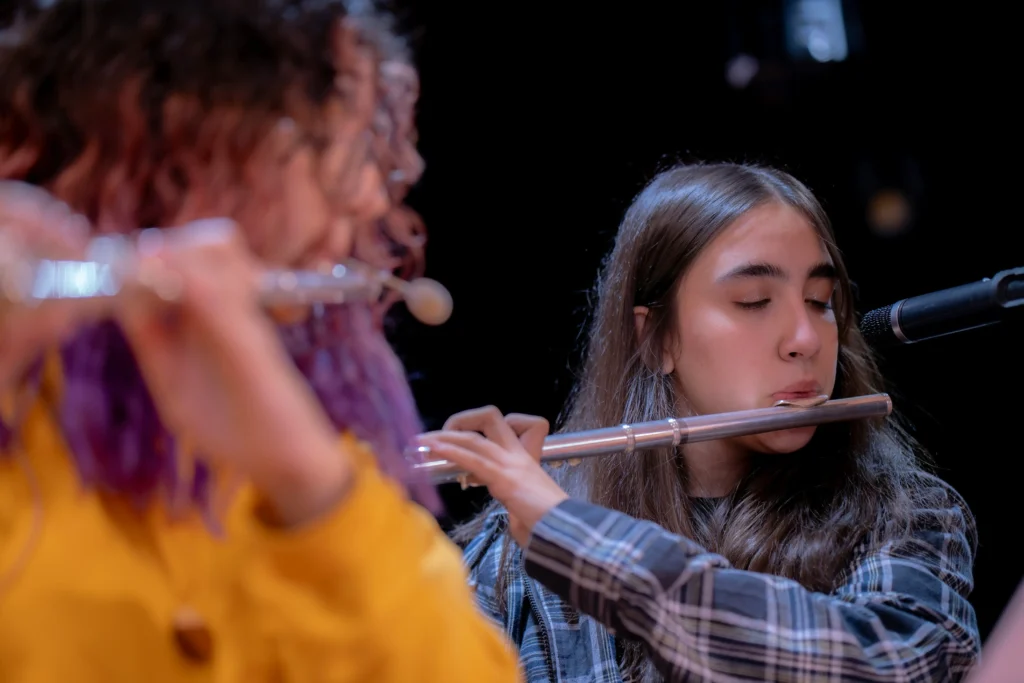
This is often misinterpreted by those seeking quick results, but true resilience is built in the silence of controlled studies.
Short rest intervals between exercise sets are essential to allow oxygen to return to the muscle tissues.
Muscle Training and Recovery Routine (2026)
| Training Stage | Main Focus | Suggested Time | Benefit for Resistance |
| Heating | Long notes and vibrancy | 10-15 min | Activation of initial blood circulation. |
| Flexibility | Ligatures and intervals | 20-30 min | Muscle elasticity and pitch control. |
| Articulation | Double/Triple tongue | 15-20 min | Synchronization between tongue and lip opening. |
| Resistance | Repertoire study | 30 – 45 min | Technical consolidation based on real demand. |
| Cooling down | Low notes pedals | 5-10 min | Tissue relaxation and drainage of lactic acid. |
How to integrate advanced articulation without deviating from the position?
Double and triple articulation technique is essential at the advanced level, but many musicians lose embouchure stability when moving their tongue.
The secret is to keep the lateral "fulcrum" of the lips firm, while the center remains vibrant.
When studying how to train advanced embouchure, You should observe if there is excessive movement in the chin or cheeks during staccato.
Read more: Embouchure: How to Avoid Excessive Tension When Playing Wind Instruments
Any external oscillation is a sign that air pressure is being interrupted or misdirected by the tongue.
Musicians who master this independence are able to articulate virtuoso passages without the spectator noticing any facial effort.
The tongue should act as a gentle valve, never as a heavy piston that pushes the embouchure structure out of place.
When to stop? Identifying the signs of dangerous fatigue.
Knowing the exact moment to stop practicing is just as important as the practice itself for preserving lip health.
If you feel the tuning is dropping or that you need to tighten the mouthpiece to reach usual notes, stop immediately.
Insisting on training under extreme fatigue alters muscle memory, leading to an erratic and dangerous compensation pattern.
Learn more: How to Avoid Respiratory Fatigue in Long Practice Sessions
The lip tissue is extremely delicate; internal micro-tears can take months to heal if you consistently exceed your pain threshold.
By 2026, the use of pressure sensors attached to the mouthpiece became commonplace to help musicians monitor their effort in real time.
This technology confirms what the masters have always said: the most beautiful sound is the one produced with the least possible mechanical effort.
The role of nutrition and rest in maintaining the mouthpiece.
Many people overlook the fact that the embouchure is composed of muscles and soft tissues that require constant hydration and nutrients for rapid repair.
Drinking water during study sessions is not just a habit, it's a physiological necessity to maintain elasticity.
Quality sleep is where the true protein synthesis occurs, strengthening the orbicularis oculi muscle after a day of intense studying.
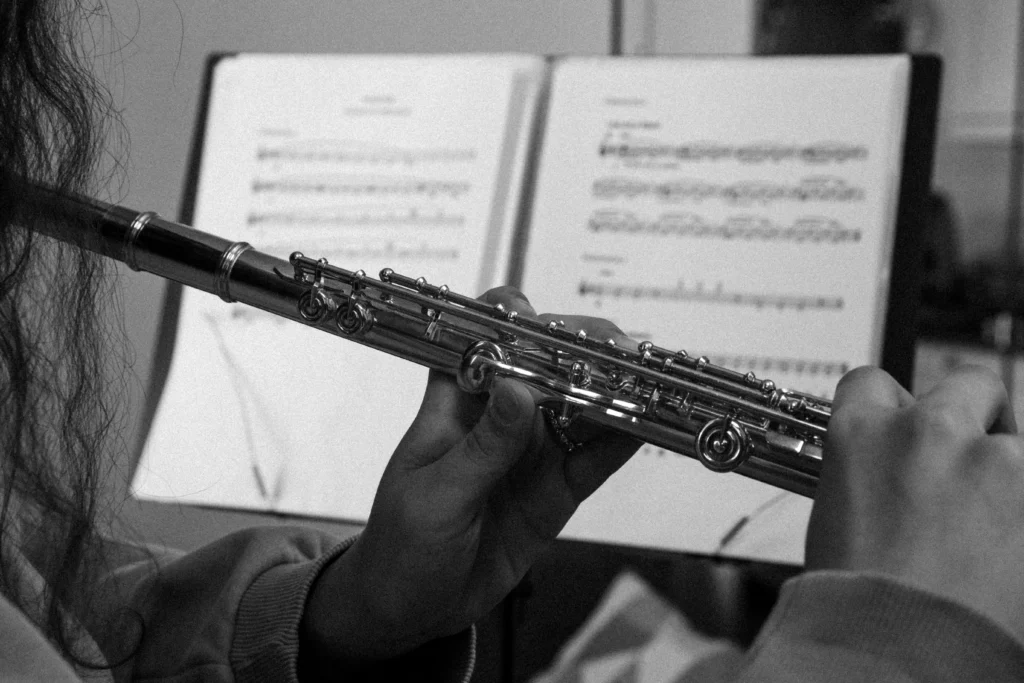
Without adequate rest, you start the next day with already inflamed muscles, which negates the technical gains of the previous day.
Learn more: Interleaved study technique applied to musical learning.
The search for how to train advanced embouchure It ends with the realization that the body is one's true instrument.
For detailed guidance on the hearing and physical health of wind instrument musicians, the World Health Organization (WHO) It offers global guidelines for preventing occupational diseases.
The balance between technical rigor and biological care is what guarantees a long and sonically rich career.
Respect your limits, refine your air technique, and understand that endurance is a byproduct of intelligent and conscious practice.
FAQ: Frequently Asked Questions about Embouchure
How long should I rest between study sessions?
Ideally, the rest time should be equal to the actual practice time. If you played for 45 minutes, take a break of at least 30 to 45 minutes to allow facial blood circulation to recover.
Does using lip balm help with resistance?
Specific ointments for musicians can help with external hydration and healing of minor irritations, but they do not replace proper technique. They are palliative; real endurance comes exclusively from muscle training and breath support.
Do pedal notes really help to relax the embouchure?
Yes, pedal notes (extremely low notes) force the lips open and stimulate blood flow in the central region of the embouchure. They act like an internal massage, making them ideal for the end of a practice session.
Can I practice advanced embouchure every day?
Yes, but with varying intensities. Just like an athlete, you need "active recovery" days, focusing on light and technical exercises, alternating with days of high performance demand to avoid overtraining.
How do I know if I'm using too much pressure?
A simple test is to try playing a middle note and then slightly move the instrument away. If the sound stops immediately, you're probably relying on mouthpiece pressure to maintain vibration, rather than using your facial muscles.
