
The construction of the dynamic viola used in rural Northeast Brazil.
The complex dynamic viola construction It represents one of the most fascinating acoustic engineering solutions in Brazilian folk instrument making, specifically designed to meet the sonic demands of singers and improvisational poets from rural Northeast Brazil.
Advertisements
Unlike purely acoustic instruments with a wooden top, this model uses an ingenious system of metal cones to amplify the sound mechanically.
Understanding the manufacturing process behind this gem of regional music allows us to appreciate the inventiveness of the artisans who adapted old industrial technologies to the reality of the backlands.
In this article, we will explore the technical aspects of its creation, the physics behind its striking volume, the meticulous selection of raw materials, and the landscape of this traditional art in 2026.
What is a dynamic viola and how does its mechanical amplification work?
This ten-stringed chordophone, arranged in five pairs, stands out visually and sonically due to the presence of one or more aluminum cones housed under the wooden top.
Advertisements
The mechanism is based on the principle of gramophones and American resonator guitars developed in the early twentieth century to amplify projection.
When the guitarist plucks or strums the taut strings, the mechanical vibration passes through the bridge and is transmitted directly to the apex of the metal cone via a piece of wood called the spider.
The cone acts like a loudspeaker diaphragm, moving the internal air with extreme physical efficiency.
This engineering ensures that the sound cuts through the ambient noise of street markets, public squares, and people singing from door to door without the need for electrical sound systems.
THE dynamic viola construction It therefore established itself as an essential technological solution for popular poets who needed to be heard clearly by large crowds.
What are the essential woods and metals used in the manufacture of this resonator?
The country music luthier selects raw materials combining structural strength with specific resonance properties to withstand the high tension of steel strings.
The body of the viola is usually carved from dense and stable woods such as rosewood, pink cedar, imbuia, or marupá for the sides and back.
The aluminum used in the cones must be a malleable alloy, yet rigid enough to be shaped on lathes or hand presses without cracking the geometric structure.
The thickness of the metal dictates the final tone, where thin sheets generate bright highs and thick sheets emphasize the mids.
| Viola component | Most commonly used material | Main Acoustic Function | Impact on the Final Tone |
| Resonator Cone | Stamped aluminum | To act as an amplifying diaphragm. | Metallic shine and high volume |
| Bridge (Spider) | Lightweight wood (Marupá/Pine) | Transfer the vibration to the cone. | Long-term support of the notes |
| Top Cover | Pink cedar or pine | Close the box and project bass. | Balance and sonic body |
| Sides and Bottom | Jacaranda or Imbuia | Reflecting acoustic waves | Stability and directional projection |
How does a luthier calibrate the metal cone on the body?
The assembly begins by creating a perfectly circular cavity in the wooden tabletop, where the support ring that will hold the outer edge of the cone will be fixed.
The craftsman adjusts the depth of this drilling with millimeter precision so that the wooden spider lightly touches the upper saddle.
Any looseness or misalignment at this point of contact generates unwanted acoustic distortions, known to musicians as fret buzz or irritating metallic hum.
To delve deeper into the historical, heritage, and documentary aspects surrounding the manifestations of popular culture and the repente (improvised poetry) of Northeastern Brazil, the portal of... National Institute of Historic and Artistic Heritage (IPHAN) It offers detailed research on intangible assets.
The final adjustment involves the application of thin varnishes that protect the wood without stifling the natural elastic properties of the structural assembly.
Master the dynamic viola construction It takes years of empirical observation to reach the exact point of balance between the flexibility of the metal and the rigidity of the body.
Why has this instrument become indispensable for repentistas (improvisational poets) in the Northeast of Brazil?
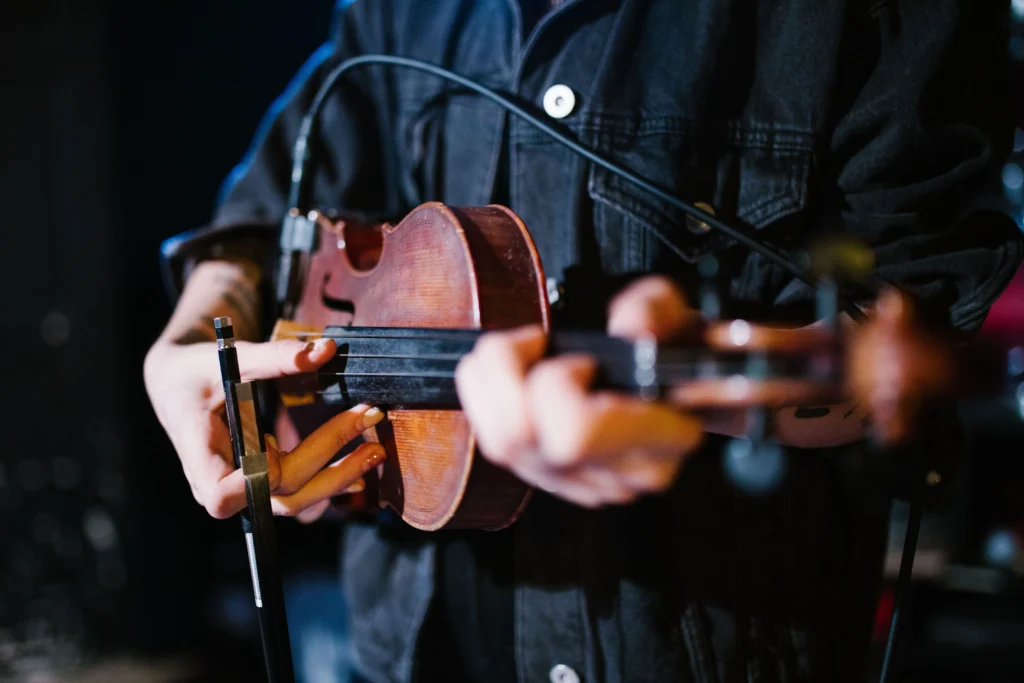
The atmosphere of improvised singing demands an instrument that responds instantly to the rapid attacks of the fingerpicking and that possesses a prolonged note sustain for the poetic pauses.
The sharp timbre of the dynamic viola stands out in the mid-high frequencies, perfectly matching the vocal range of poets and singers.
This characteristic of sound projection allowed the tradition of improvisation to survive in public markets before the advent of portable battery-powered amplification systems.
Read more: Tuning guide for the viola de cocho in the current Pantanal region.
The instrument functions as a reliable work tool, withstanding well the abrupt variations in humidity and temperature common in the Brazilian semi-arid region.
Beyond the practical aspect, the visual aesthetic of the exposed metal discs on the soundboard has become a symbol of prestige and cultural identity for the musician.
Wielding a dynamic viola crafted by a renowned master artisan confers immediate artistic authority upon any participant in any calango festival.
When did modern technology begin to influence traditional manufacturing?
Contemporary luthier workshops in 2026 incorporate digital cutting and frequency measurement tools to standardize the quality of the aluminum cones produced.
High-impedance piezoelectric sensors are discreetly installed under the cone, allowing the musician to connect the instrument to modern digital mixing consoles without losing its original acoustic identity.
These innovations are attracting a new generation of guitarists who blend traditional songs with textures of contemporary instrumental music, MPB (Brazilian Popular Music), and alternative rock.
Learn more: How the buriti wood viola preserves traditions of the Cerrado.
To view instrument catalogs, biographies of great guitarists, and collections of sheet music for traditional Brazilian music, visit the official website of [organization name]. National Library Foundation (FBN).
Preserving these artisanal techniques ensures the survival of an economic ecosystem that supports families of artisans, metal founders, and licensed lumberjacks across the country.
To promote dynamic viola construction It is about safeguarding Brazilian ingenuity, keeping alive the soundtrack that has echoed for decades through the landscapes of the rural Northeast.
The future of Brazilian country lutherie in the era of global sustainability.
The longevity of this traditional craft lies in the ability of new artisans to adapt to the environmental restrictions on extracting rare native woods from the Atlantic Forest.
Read more: Review of guitar stands: stability and durability
The use of certified alternative materials and the reuse of recyclable metal alloys point towards an ecologically responsible, viable production that is integrated into the current market.
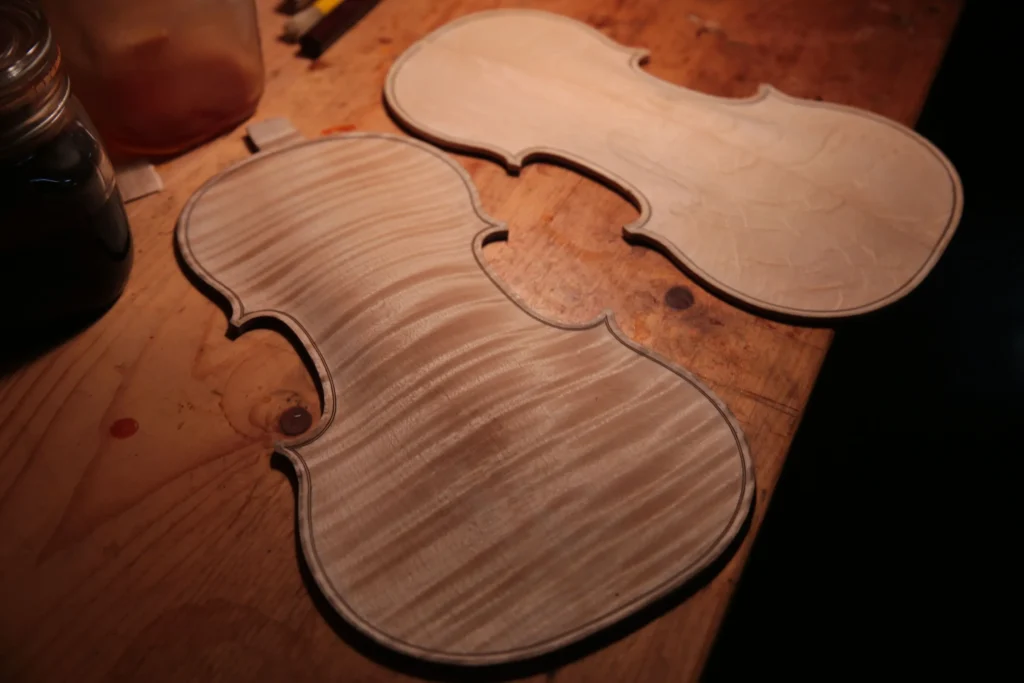
Value the work of Brazilian luthiers, research the origin of your instrument, and support regional festivals that keep the art of poetic improvisation alive.
When you listen to the brilliant sound of a dynamic viola, remember that each note carries centuries of history, applied physics, and cultural passion rooted in the identity of the people of the Sertão region.
Frequently Asked Questions about the Dynamic Viola
What is the main difference between a dynamic viola and a common Brazilian viola?
The dynamics feature internal aluminum cones that amplify the sound mechanically, while the traditional viola caipira relies exclusively on the vibration of the wooden soundboard.
How should the aluminum cones of the instrument be cleaned?
Cleaning should be done only with dry, soft microfiber cloths, avoiding abrasive chemicals that could scratch the metal or damage the varnish on the tabletop.
Is it possible to transform a traditional acoustic viola into a dynamic viola?
Not in a simple way, as the internal structure requires a specific and deeper support box to properly house and secure the set of resonator cones.
What is the most commonly used tuning for repentistas (improvisational poets) in rural Northeast Brazil?
The most common tuning in the region is the "Paraguaçu" (or D tuning), although variations such as "Cebolão" in E or D are also found depending on the style of the guitarist.
