
The history of the tambourine in samba: evolution and modern techniques.
Understanding The history of the tambourine in samba. It reveals how a centuries-old percussion instrument from the Mediterranean basin has become the beating heart of Brazilian musical identity.
Advertisements
Its arrival in the country via Portuguese colonization took on a life of its own when rhythmic traditions of African origin appropriated its metal and leather structure in the streets of Rio de Janeiro.
How did the tambourine become established as a central element of samba?
The fusion of Bahian chulas with the urban batuque of Rio de Janeiro at the beginning of the 20th century demanded a lightweight instrument capable of articulating complex syncopations with clarity.
Pioneering masters of Praça Onze realized that the cymbals of the instrument offered the ideal high-pitched brightness to fill the spaces between the striking bass sounds of the surdos and tambourines.
Explore the The history of the tambourine in samba. It reveals the transition from mere rhythmic accompaniment to leading musical regionalisms in choro and in the terreiros of samba masters.
Advertisements
Great percussionists have demonstrated that alternating movements of the thumb, fingertips, and palm of the hand create a continuous rhythm, capable of sustaining entire parades with surgical precision.
What are the differences between traditional and modern materials?
The evolution of physical components directly altered the sound, weight, and durability of the instrument in informal gatherings, live performances, and studio recordings.
Animal hide skins offer velvety and warm deep tones, while modern synthetic membranes ensure tuning stability in the face of variations in external humidity and temperature.
The following table details the actual technical characteristics of the materials used in the manufacture of tambourines to help evaluate the best choice according to the presentation context:
| Skin Type and Frame | Acoustic Response | Durability and Maintenance | Ideal Musical Application |
|---|---|---|---|
| Goat leather with wood | Deep, dry, and traditional sound | It requires constant adjustment to the climate. | Traditional samba, choro, and studio. |
| Nylon / Mylar with ABS | A crisp, sharp, and bright tone. | High resistance to impact and moisture. | Modern pagode and street blocks |
| Double Skin (Patched) Aluminum | Controlled sound with fewer harmonics. | High stability under direct sunlight. | Samba schools and open-air stages |
| Spear Skin / Synthetic Leather | Balance between bass and treble. | Medium resistance with excellent control | Acoustic formations and MPB (Brazilian Popular Music) |
Choosing the right combination of wood, metal alloy in the cymbals, and membrane type completely transforms the percussionist's sound projection during an instrumental performance.
How did the masters of rhythm revolutionize technical handling?
Pioneers like Jackson do Pandeiro and João da Baiana transformed the use of the instrument by introducing visual juggling tricks without losing the precision of rhythmic phrasing.
The development of wrist rotation movement allowed for multiplying the speed of the strokes, creating ornamental variations and accents that simulate a complete drum kit on a single rim.
To explore the historical collection, documents, and memorabilia of Brazilian popular music held by the federal government, visit the portal of... National Library Foundation.
Rescue the The history of the tambourine in samba. This helps to understand how Brazilian syncopation influenced international percussionists through the sophistication of its execution and sonic versatility.
Contemporary techniques include dynamic muting with the lower fingers, creating snare and bass drum effects that enrich samba-jazz arrangements and universal fusions.
What modern techniques are indispensable for today's rhythm player?
Developing finger independence is the main requirement for mastering modern fingerpicking, allowing you to alternate between sharp strokes and subtle ghost notes throughout the measure.
Learn more: The Best Natural Leather Tambourines: Our Favorites

Applying fills using tremolos, obtained by rubbing a moistened middle finger against the skin, adds sustain and drama to the transitions between musical sections.
Studying compound meters and asymmetrical rhythms expanded the instrument's reach, bringing the Brazilian pandeiro to major conservatories and music colleges around the world.
Practicing with a metronome at slow tempos ensures the mechanical stability needed to execute complex divisions without fluctuating in speed during long live performances.
Where can I study the documentation and preservation of intangible heritage?
Historical preservation institutions register the traditional samba de terreiro (Afro-Brazilian samba) and the roots of Rio de Janeiro samba as cultural heritage, safeguarding the knowledge of the masters and artisans of instruments.
Learn more: Which Tambourine is Better for Samba de Roda? (Torelli vs Luen)
Researching old phonographic recordings makes it possible to identify the evolution of tuning standards and the style of cymbals used in the first phonographic recordings of the twentieth century.
To explore reports and research on the registration of intangible cultural heritage of Brazilian music, consult the... National Institute of Historic and Artistic Heritage (IPHAN).
Understand the The history of the tambourine in samba. It values the work of artisan luthiers who keep alive the tradition of woodworking and custom tuning of the instrument.
Encouraging new generations to learn the pandeiro (Brazilian tambourine) ensures the perpetuation of this cultural legacy, keeping the flame of samba alive in squares, theaters, and academic workshops.
The enduring presence of a national cultural icon.
The instrument's trajectory demonstrates an impressive capacity for reinvention, adapting from traditional samba to contemporary digital productions without losing its distinctive acoustic essence.
Read more: Best Brazilian songs for practicing tambourine.
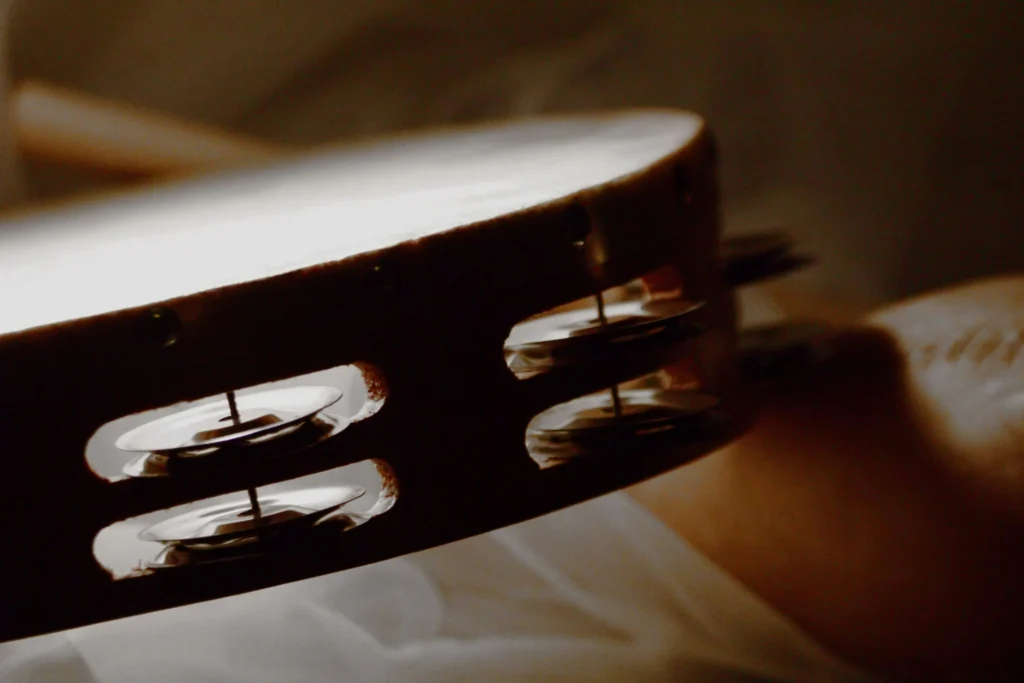
Studying The history of the tambourine in samba. It inspires musicians of all ages to improve their motor coordination and artistic expression through a genuinely Brazilian heritage.
Pick up your instrument, practice the fundamental movements daily, and become part of this rich rhythmic tradition that continues to enchant audiences around the world.
FAQ (Frequently Asked Questions)
What is the difference between a leather tambourine and a nylon tambourine in samba?
The leather tambourine produces a deeper, drier, and more velvety sound, ideal for traditional samba and choro. The nylon tambourine offers a bright and sharp sound, perfect for pagode and open-air venues.
How can I prevent the leather skin of a tambourine from deteriorating due to moisture?
Loosen the tuning pegs slightly after use to relieve tension on the rim, and store the instrument in a padded case away from excessive heat and direct sunlight.
What is the most recommended tambourine size for beginners?
The 10-inch model is the most versatile standard, offering a balanced weight for wrist training and excellent sound response for both leather and nylon strings.
Do I need to use some kind of paste or product to create the trembling effect?
Many percussionists use powdered rosin or a specific wax on the edge of the drumhead to increase friction with the finger, making it easier to play the tremolo continuously without it slipping.
