
Time signature guide for self-taught musicians
Improve the Time signature for self-taught musicians It forms the fundamental basis for anyone who wants to execute complex arrangements with fluidity, safety, and professional precision.
Advertisements
Studying an instrument without the in-person accompaniment of a conductor requires the development of a keen internal perception of the precise division of musical time.
Mastering this technical skill prevents your interpretations from drifting in tempo, allowing you to play together with other instrumentalists in a fully integrated way.
This practical guide presents structured concepts and efficient exercises to transform your motor coordination into an infallible rhythmic reference during your daily study sessions.
What is rhythmic division and how do time signatures organize the flow of music?
Time signatures function as mathematical coordinates that determine the number of beats contained in each block of a musical score or chord chart.
Advertisements
The top number indicates how many beats make up the cycle, while the bottom number defines which rhythmic figure represents the standard unit of time.
Understanding this structural organization prevents the student from relying purely on intuition, providing a clear visual map of how grades are distributed in physical space.
When a musician learns to read and anticipate these divisions, the performance takes on much more expressive and dynamic interpretative contours.
Efficiency in Time signature for self-taught musicians It depends directly on this conscious decoding of the metric structures found in popular and scholarly repertoires.
Taking the time to decipher the rhythmic architecture before moving your fingers across the strings or keys accelerates the learning of any new piece.
What physical techniques help maintain momentum without involuntary fluctuations?
Using a metronome remains the most reliable tool for stabilizing pulse rate, but its effectiveness doubles when combined with kinesthetic bodily stimulation.
Lightly tapping the tip of the toe or subtly swaying the torso helps transfer mathematical counting to deep muscle memory.
Dividing time into smaller fractions, a technique known as mental subdivision, prevents the instrumentalist from speeding up during long pauses or slowing down in passages full of fast notes.
Maintaining a continuous flow of internal counting stabilizes the tempo, serving as an invisible anchor of rhythmic protection.
To deepen your knowledge of music theory, access educational materials, and consult scientific research on rhythmic cognition and performance, visit the portal of... National Association for Research and Graduate Studies in Music (ANPPOM) It offers highly authoritative academic articles.
| Time Signature Type | Common Formula | Pulse and Metric Accentuation | Predominant Musical Genres |
| Simple Binary | 2/4 | Strong - Weak | Samba, Military March and Choro |
| Simple Ternary | 3/4 | Strong Weak – Weak | Waltz, Guarânia and Classical Jazz |
| Simple Quaternary | 4/4 | Strong Weak – Medium Strong – Weak | Rock, Pop, Blues and Bossa Nova |
| Compound Binary | 6/8 | Strong (1-2-3) – Weak (4-5-6) | Baião, Northeastern Music and Ballads |
How does the conscious study of compound time signatures expand your technical versatility?
Compound time signatures feature an internal pulse subdivided into three equal parts, differentiating them from simple time signatures where each beat is broken into two halves.
Identifying this unique rhythmic fluctuation allows the self-taught student to navigate traditional Brazilian and folkloric genres with extreme ease.
Practicing counting aloud while clapping helps to separate the instrumental execution from the counting of the main pulse.
This isolation of brain functions develops the motor independence necessary to cope with arrangements that exploit polyrhythms or abrupt changes in tempo.
Develop the Time signature for self-taught musicians In ternary or compound time signatures, patience is required to reprogram reflexes that are ingrained in strictly binary subdivisions.
Breaking through this technical barrier elevates the quality of your performance, lending a professional and refined swing to your musical creations.
Why does the graphical visualization of time signatures accelerate the memorization of complex rhythms?
Drawing small vertical lines over the lyrics of songs or creating visual block diagrams helps the brain map out where the strong beats fall.
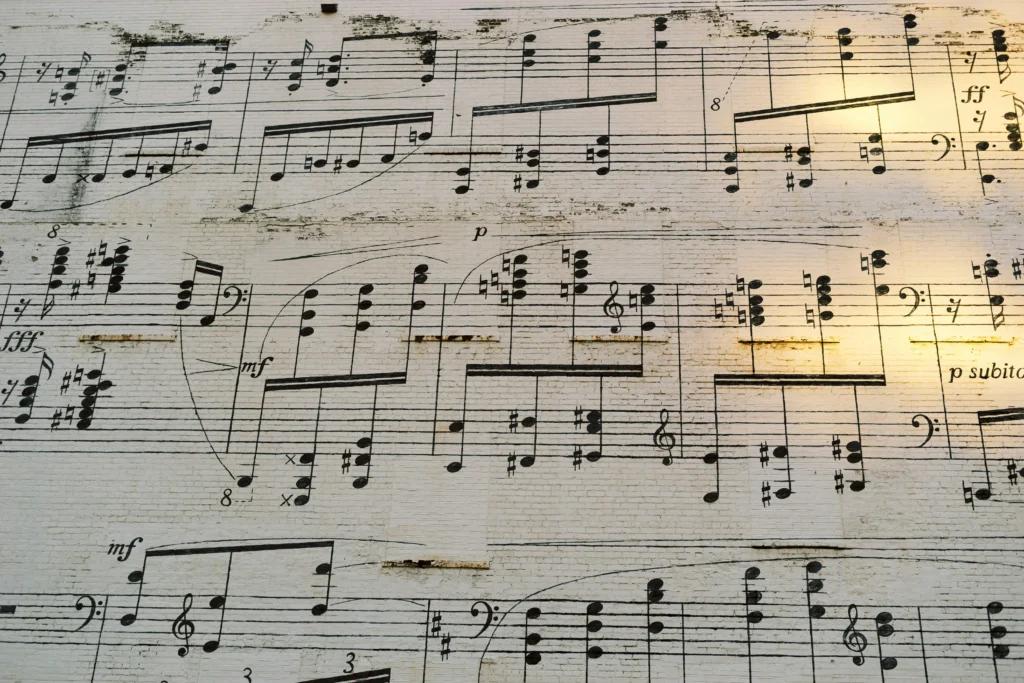
This spatial mapping technique transforms abstract theoretical concepts into concrete visual references that are easily absorbed by the independent student.
Read more: How to Use a Metronome to Really Improve Your Rhythm
Visually identifying the exact location of syncopations prevents you from losing the initial pulse when playing notes that start off-beat.
This systematic organization builds a foundation of trust that is indispensable for anyone making home recordings or public presentations.
Adjust the Time signature for self-taught musicians It involves exercising auditory perception through careful analysis of tracks recorded by great instrumental artists.
Isolating the sound of the drums or bass during listening helps to understand how professionals anchor their dynamics in the structural pulse.
When should you use rhythmic training apps to validate your practical progress?
Current technology offers a multitude of applications that transform perception training into interactive challenges with millimeter-precise feedback.
Learn more: Musical games to teach rhythm to children at home
Using these digital tracking tools allows you to monitor your oscillation rate and correct chronic time deviations in a completely autonomous way.
To consult teaching methods, public domain sheet music, and guidelines for the development of music education in Brazil, visit the official website of... Brazilian Association of Music Education (ABEM) It provides publications and reports with excellent pedagogical foundations.
Internalizing rhythm to achieve true artistic freedom.
Gaining autonomy in the division of musical time frees the instrumentalist from the need for constant supervision, paving the way for continuous technical evolution.
Neglecting precise timing turns fast-paced performances into confusing presentations, compromising the clarity of the melodies and harmonies being built.
Read more: How to apply musical reverse study to difficult solos.
Open your metronome app today, choose a simple beat, and focus on the perfect synchronization between your body movements and the sound click.
By making rhythmic precision a daily study habit, your interpretations will gain the solidity, balance, and artistic authority needed to stand out in the music scene.
Frequently Asked Questions about Music Division
What is the practical difference between a strong beat and a weak beat within an arrangement?
The strong beat receives the natural accent that drives the rhythm of the musical style, while the weak beats serve as support for the preparation of the next rhythmic cycle.
How can I keep the correct time signature in songs that don't have drums or percussion?
You must internalize the pulse by using mental subdivision or by following the harmonic changes in the music, which generally occur on the first beat of the measure.
Is it harmful to study musical division techniques using very slow speeds?
On the contrary, starting the workout at slow paces is the most recommended strategy for accurately mapping the movements before speeding up the execution.
What should I do when I have difficulty coordinating my voice with the rhythm of the instrument?
Practice singing only the main beat while clapping before attempting to combine the lyrics with the complex chords of your musical instrument.
