
How to incorporate music therapy into children's daily routines
Learn to Applying music therapy to children's routines Home care represents a scientifically validated therapeutic strategy to optimize the cognitive, emotional, and social development of growing individuals.
Advertisements
Unlike traditional music classes, this approach focuses on psychological well-being and the regulation of the central nervous system through personalized sound stimuli.
The contemporary home environment, often saturated with digital screens and excessive visual stimuli, finds in structured musical elements an indispensable tool for achieving balance.
By introducing sound dynamics during daily transition moments, parents can ease anxiety peaks and strengthen family bonds.
What is the music therapy approach and what are its impacts on cognitive development?
The planned use of sound by professionals and caregivers aims to restore channels of communication, expression, and motor organization that verbal language does not always achieve.
Advertisements
The brain hemispheres process musical stimuli holistically, activating areas linked to deep memory, motor coordination, and mood regulation.
Several clinical studies demonstrate that structured exposure to consistent rhythmic beats aids in the language development of children in the early stages of literacy.
The child's brain associates the division of spoken syllables with musical time patterns, accelerating phonetic comprehension in school.
Furthermore, active practice improves synaptic connections through neuroplasticity, creating a solid foundation for learning exact sciences and developing focus skills.
Music acts as an internal organizer that helps the child decode the world around them in a peaceful way.
How do the properties of sound directly influence emotions and behavior in the family environment?
Sound frequencies and the tempo of a melody have the biological ability to alter the heart rate and breathing patterns of young children.
Music with fast tempos generates alertness and energy responses, while slower harmonies induce progressive and deep muscle relaxation.
Understanding this physical dynamic allows parents to transform the home into a safe haven, preventing episodes of severe irritability caused by extreme fatigue.
Behavioral stabilization occurs because appropriate auditory stimuli activate the release of dopamine and endorphins into the bloodstream.
To understand the scientific criteria for validating integrative therapies and to access national guidelines on childhood health and well-being, visit the portal of... Ministry of Health.
Why does linking specific songs to moments of daily transition reduce resistance crises?
Switching from a fun activity to daily chores, such as putting away toys or taking a bath, often generates stressful conflicts between parents and children.
Achieve Applying music therapy to children's routines It serves to build predictable sound bridges that playfully prepare the child's brain for the next action.
The organization's playlist signals to the child's subconscious that playtime is over, eliminating the need for repetitive verbal commands.
Routine loses its authoritarian character and takes on a form of mutual cooperation that preserves the harmony of the family unit.
This auditory predictability generates psychological security in children with neurodivergent profiles, who need clear rituals to navigate the day without emotional overload.
Musical stimuli become allies in building healthy and sustainable long-term autonomy.
Structured Guide: Schedule of Auditory Stimuli for Daily Life
The appropriate choice of music should follow the child's natural energy curve, respecting the biological needs of each moment of the day.
The table below summarizes the recommended technical parameters for creating a balanced home environment:
| Time of Day | Recommended Frequency Range | Musical Tempo (BPM) | Main Therapeutic Objective | Example of a Practical Activity |
| Morning (Wake-up) | Mid and bright frequencies | 90 to 110 BPM (Moderate) | Motor stimulation and cognitive activation | Folk songs with rhythmic clapping |
| Afternoon (Study/Focus) | Sounds of nature and instrumental music | 60 to 70 BPM (Slow) | Concentration and organization of ideas | Baroque classical music or sounds of rain |
| Late Afternoon | Predictable sung melodies | 80 to 90 BPM (Soft) | Release of accumulated tensions | Singing together while playing instruments |
| Night (Sleep) | Pure sounds and low frequencies | Below 60 BPM (Slow) | Reducing cortisol and inducing sleep. | Continuous instrumental lullabies |
Practical data shows that small adjustments to the home's soundscape prevent the mental exhaustion that often affects children at the end of the day.
The conscious use of these metrics creates a healthy ecosystem, reducing screen dependence and promoting deeper human interactions.
Which simple percussion instruments help in the development of fine motor skills?
Introducing small rattles, hand drums, or children's metallophones transforms passive listening into a highly valuable active motor engagement experience.
Tapping to the right beat requires mental planning and muscle control, improving eye-hand coordination.
Learn more: Review of Brazilian percussion instruments for beginners
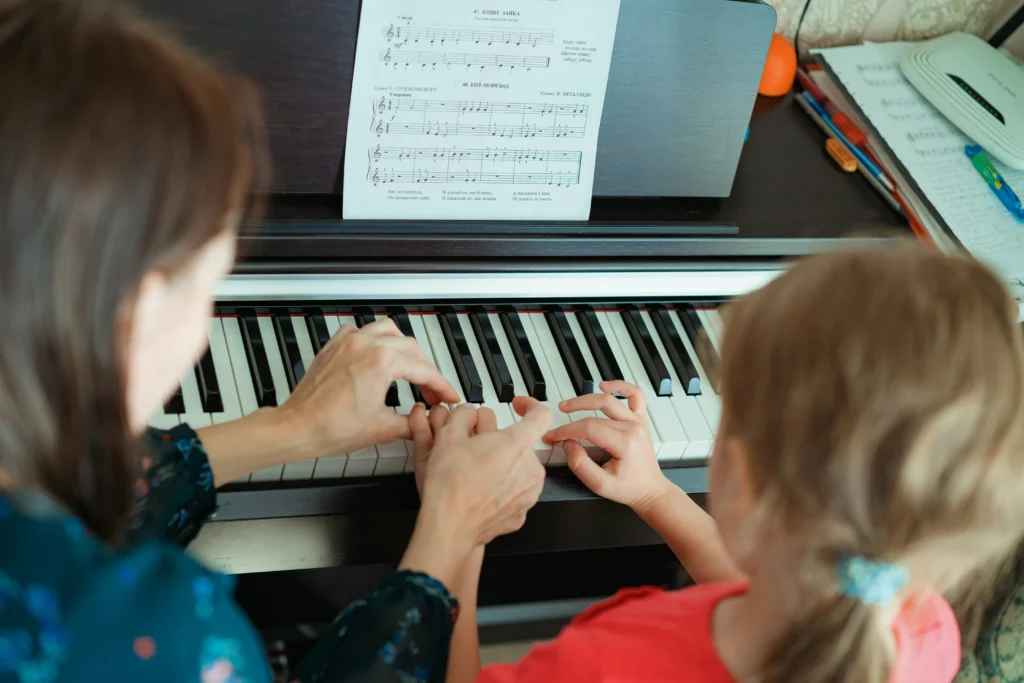
Manipulating various sound objects stimulates tactile perception and teaches important spatial concepts related to intensity, force, and body control.
These games prepare the hand muscles for fundamental school activities, such as the correct handling of a pencil and scissors.
Hands-on learning through touch develops persistence and tolerance for frustration, as the child perceives the evolution of their own movements.
The mistake transforms into a different sound, stimulating natural curiosity and continuous improvement.
When should you seek a professional specializing in clinical music therapy interventions?
While parents can enrich the home environment with music, certain developmental needs require the clinical eye of a qualified music therapist.
Professional support becomes essential when a child presents with severe speech delays, extreme difficulties in socialization, or global sensory processing disorders.
Read more: Instruments for Autistic Children: How to Use Music in Sensory Development
The therapist develops individualized plans that use music to open specific communication pathways for each identified neurological need.
To access advanced scientific research and guidelines on holistic child development, visit the database of Pan American Health Organization (PAHO).
Strengthening Family Harmony Through Sound Practices
Creating a musically conscious home environment offers benefits that go beyond immediate behavioral gains, paving the way for resilient emotional intelligence.
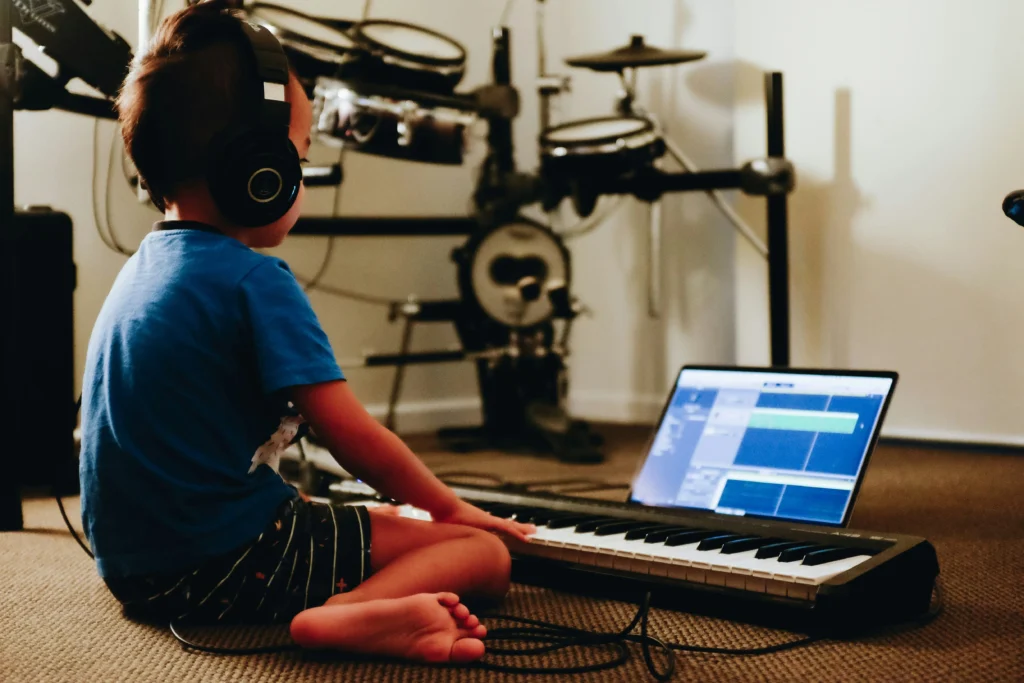
Adopting simple therapeutic approaches in daily life equips parents with loving and effective resources to deal with the modern challenges of raising children.
Learn more: Music and child neurodevelopment: what studies say
The secret to the success of this approach lies in the consistency of its applications and the careful selection of stimuli, avoiding residential noise pollution.
By transforming sound into a strategic ally, we provide children with the necessary tools to grow with balance, creativity, and emotional security.
Frequently Asked Questions (FAQ)
Can I leave the music playing in the background all day to calm the house?
It is not recommended to keep the sound running continuously, as this can cause auditory fatigue and lead the child to ignore the sound stimuli.
Silence is also a fundamental part of therapy, allowing the brain to rest and process the information received.
Do you need to know how to play a musical instrument to apply these tips at home?
Absolutely not, as home use does not require technical knowledge of music theory or skills with complex instruments.
The main focus is on singing along, keeping time with the rhythm by clapping, or using simple everyday objects like homemade rattles.
Are upbeat commercial children's songs suitable for relaxation?
Generally not, because commercial productions aimed at children tend to use very fast tempos and high-pitched tones that encourage restlessness.
For moments of relaxation or sleep, always prefer instrumental versions, soft classical music, or gentle nature sounds.
How long should each musical activity last with younger children?
For young children, short, focused periods of five to ten minutes are more effective than long sessions that tire their attention.
The most important thing is to observe the child's engagement signs, interrupting the activity as soon as you notice clear signs of distraction or tiredness.
