
How to use children's sound stories in music learning.
Integrate the children's sound stories in musical learning It will revolutionize early childhood music education by 2026, transforming passive listening into an active process of neurological discovery.
Advertisements
The common mistake of limiting music education to the mechanical repetition of scales and sheet music often stifles children's spontaneous interest.
By associating playful narratives with specific acoustic stimuli, educators and parents can activate brain areas linked to language, motor coordination, and aesthetic sensitivity.
This practical approach connects children's literature to the fundamentals of music theory, presenting valuable strategies to optimize the cognitive development of young children.
We will address the perception of sound parameters, active teaching methodologies, pedagogical tables, instrument selection, and guided storytelling techniques.
Advertisements
What are sound stories and how do they accelerate musicalization?
This pedagogical practice consists of narrating literary tales by organically integrating sounds produced by musical instruments, everyday objects, or the human voice itself.
The acoustic effects don't serve as mere background decoration, but function as active characters that drive the narrative forward.
The application of children's sound stories in musical learning It allows complex concepts such as pitch, duration, and intensity to be absorbed without the need for tedious theories.
Children decode the parameters of sound while having fun following the fate of the characters.
This natural process of aesthetic literacy mimics the learning of the mother tongue, prioritizing sensory experience before writing according to traditional guidelines.
Emotional engagement with the storyline keeps students focused for much longer periods.
How to choose the ideal instruments to provide sound for a storytelling session with children?
The selection of acoustic material should prioritize safety and timbre diversity, blending percussion instruments with alternative objects featuring rich textures.
Jingle bells, triangles, wooden blocks, and small drums offer an immediate tactile response that fascinates young performers.
To explore national education guidelines and complementary pedagogical foundations for early childhood education, please consult the... Ministry of Education (MEC).
Exploring body sounds, including clapping, snapping, and tapping, enriches the activity without inflating the budget of the school or family project.
The important thing is to establish clear codes where each sound represents a recurring physical action throughout the reading process.
What musical skills are developed in each age group?
The impact of sound stimulation varies according to the child's neurological development, requiring challenges compatible with their muscle tone and capacity for abstraction.
To plan efficient and effective activities in daily school life, examine the competency mapping:
Mapping of Pedagogical Competencies by Age
| Target Age Range | Focus of the Sound Stimulus | Priority Musical Parameter | Expected Practical Response | Secondary Cognitive Benefit |
| 0 to 2 years (Babies) | Basic timbral discrimination | Intensity (Strong and Weak) | Body language and vocalizations | Strengthening the emotional bond |
| 3 to 4 years | Pulse and motor imitation | Tempo (Fast and Slow) | Keep the rhythm by clapping. | Development of gross motor skills |
| 5 to 6 years | Structuring arrangements | Pitch (Low and High) | Identify melodic variations | Vocabulary expansion and memory |
| Above 7 years old | Improvisation and free creation | Musical Form and Texture | Creating unconventional musical scores | Logical thinking and teamwork |
Numerical and behavioral indicators demonstrate that acoustic narratives accompany the child's growth, adapting to new intellectual realities without losing their charm.
Respecting this biological rhythm prevents premature frustration and cultivates a genuine love for art.
Why does active listening prevent attention deficit in the school environment?
The bombardment of digital screens has accustomed the brains of new generations to hyper-fast visual stimuli, atrophying their ability to concentrate on purely auditory stimuli.
Practicing focused listening forces the mind to construct internal images, strengthening creative imagination in a healthy way.
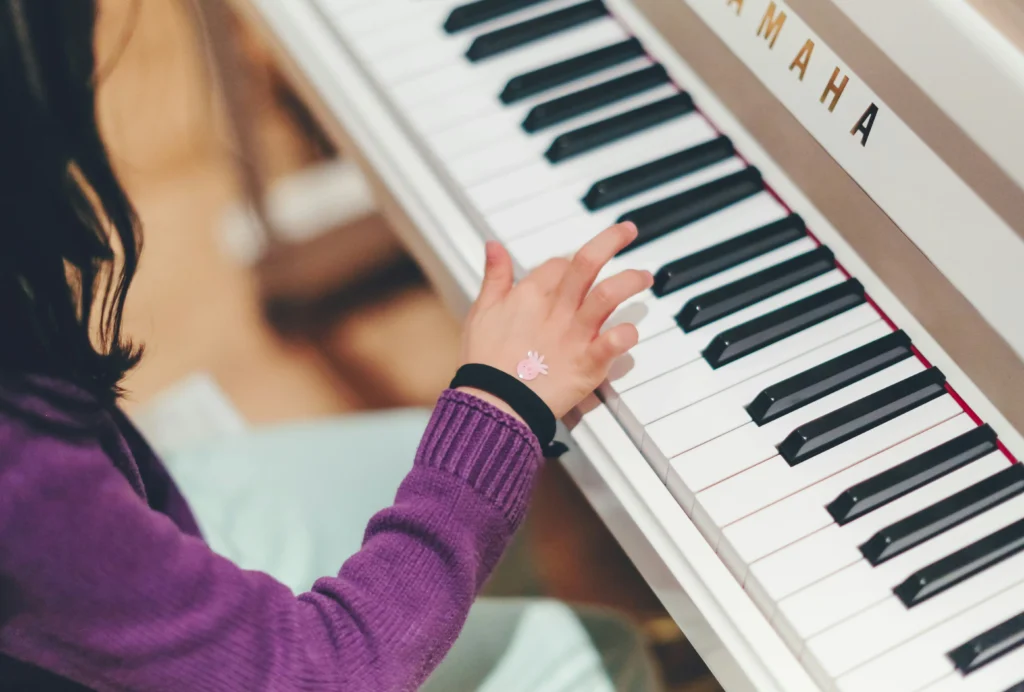
The systematic use of children's sound stories in musical learning It works like mental weight training, where the student needs to wait for the exact moment to intervene.
This playful discipline works on inhibitory control, teaching children to manage anxiety and respect silence.
Learn more: How to incorporate music therapy into children's daily routines
Learning to listen to others and to coordinate one's own input improves social interaction within the school environment.
Music is becoming established as a tool for collective emotional regulation of immense value to educators.
When should you introduce reading unconventional sheet music into a child's routine?
The ideal time to transition to graphic representations is when the child has already mastered the auditory association of the characters with clarity.
Drawing simple symbols on the board, such as large circles for loud sounds, intuitively begins the process of writing music.
Read more: How to use soundtracks to regulate emotions in children
This visual representation prepares the ground for subsequent traditional musical literacy on the five-line staff without generating traumatic psychological blocks.
Learning flows as a natural extension of spoken play, maintaining enthusiasm and self-confidence in artistic potential.
The Future of Education Through Acoustic Stimulation
Childhood requires concrete experiences that involve both the body and emotions, ensuring that intellectual development occurs in a balanced and happy way.
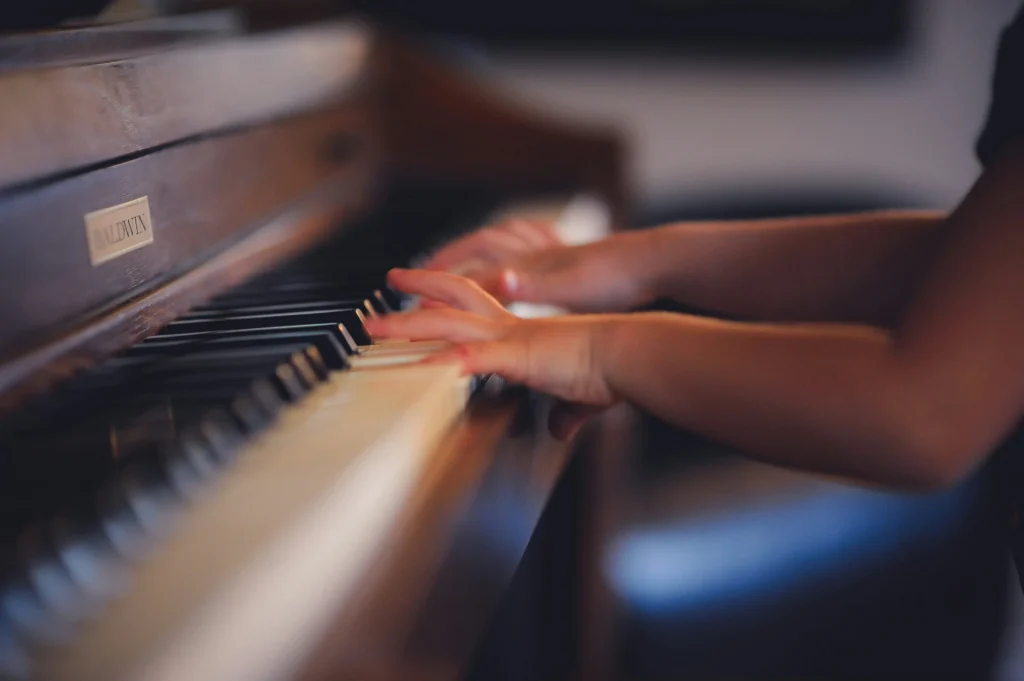
Rescuing oral tradition combined with educational sound design gives children back the right to create entire worlds using only their hearing.
Learn more: How to develop children's sound perception through creative games.
Adopting methodologies that combine literature and music enriches the cultural repertoire of families and transforms classrooms into spaces of constant discovery.
The future of human development rests on artistic sensitivity and the ability to listen to the world around us with empathy.
To explore global research on the impact of music on infant brain development and neuroscientific studies on cognition, visit the portal of... Society for Education, Music and Psychology Research (Always).
Frequently Asked Questions (FAQ)
Do you need to know how to play an instrument to use this method with children?
No, you don't need to be a professional musician to create engaging acoustic narratives with young children at home or at school.
The main focus of the activity is on the free exploration of sounds, everyday noises, and vocal expressions, prioritizing creativity over rigid technique.
How can you prevent sound reinforcement activities from turning into uncontrolled noise?
The secret to maintaining organization lies in establishing the "silence signal" before distributing the percussion instruments to the group.
Combine a visual gesture that signifies that all instruments should rest on the lap, ensuring that the narrator's voice is always the guiding thread.
Which children's literature books work best with this technique?
Books that feature expressive onomatopoeia, repeated phrases, elements of nature, or animal movements are ideal for starting this project.
Classic stories with repetitive structures make it easier for younger children to learn the sound commands, creating a comfortable sense of predictability.
Are long texts recommended for early childhood education classes?
No, for young children, texts should be short, direct, and focused on intense physical actions to keep their interest active.
Long narratives demand a great deal of memory retention, which can distract the group and compromise the intended musical performance.
