
How to use lullabies to improve children's sleep.
To understand how to use lullabies Establishing a proper bedtime routine for infants improves the quality of the baby's rest and significantly reduces family stress caused by sleepless nights.
Advertisements
The transition to sleep requires a predictable, safe, and slowed-down environment, in which soft sound frequencies signal to the developing brain that it is time to relax completely.
Strategically integrating music into daily routines transforms bedtime into a loving experience, strengthening bonds and promoting greater sleep independence.
How does music affect a child's brain during sleep?
Slow, repetitive melodies lower the baby's heart rate, stimulating the release of feel-good hormones while substantially reducing circulating cortisol levels in the body.
The constant rhythmic structure of the songs calms the central nervous system, helping the child to organize the sensory impressions accumulated throughout a day full of new learning experiences.
Advertisements
Listening to soft sounds reduces the separation anxiety typical of childhood, creating a comforting sonic bridge between the active presence of parents and the solitude of the crib.
To consult guidelines on infant health and child development, access the... Brazilian Society of Pediatrics.
This positive neurological response promotes entry into the deeper stages of sleep, ensuring restorative rest that is vital for neurological maturation and proper physical growth.
What is the ideal time and the correct way to introduce songs?
The process should begin about thirty minutes before the desired bedtime, dimming the lights in the room and turning off all screens and electronic devices in the house.
Singing directly to the baby in a soft voice and steady rhythm is extremely effective, as the maternal tone acts as the most powerful emotional modulator known to science.
Below, we present a table with recommended technical parameters regarding the use of sound stimuli in the baby's room, aiming to protect hearing and optimize sleep hygiene.
| Sound Usage Parameter | Technical Recommendation | Expected Impact on Sleep | Important Precautions |
| Audio Volume | Maximum of 50 to 60 decibels | Prevents awakenings and micro-awakenings | Keep the player away from the crib. |
| Execution Time | 30 to 45 minutes continuously | Consolidation of initial sleep | Use a timer to turn it off. |
| Tempo (BPM) | 60 to 80 beats per minute | Synchronization with the heart rhythm | Avoid abrupt changes in music tracks. |
| Frequency Type | Instrumental music and pink noise | Masking of external noises | Do not use speakers that are pressed against your ear. |
Applying these recommendations ensures a safe acoustic environment, preventing sound from becoming an excessive dependency or an unwanted source of overstimulation for the young child.
Why does the consistency of routine enhance the effects of melodies?
The daily repetition of the same songs creates a powerful cognitive association, where the brain immediately links that sequence of notes to the inevitable act of closing one's eyes.
Learn how to use lullabies It requires patience and consistency, maintaining the same schedule and the same sequence of steps every night of the week without exception.
Adding gentle massages or quiet reading while music plays in the background reinforces the feeling of predictability, decreasing the child's natural resistance to sleep.
When parents maintain calm and discipline during the ritual, the child feels safe, reducing crying, nighttime awakenings, and excessive fatigue throughout the day.
This structured consistency paves the way for healthy habits that last throughout childhood, bringing lasting benefits to the physical and mental health of the whole family.
What are the most common mistakes when playing music for young children?
Leaving the audio playing all night can impair natural auditory processing and create dependence, making it difficult for the child to fall asleep alone if they wake up in the middle of the night.
Using speakers too close to a baby's head exposes their sensitive ear canal to excessive volume, which can cause sensory fatigue and damage to developing hearing.
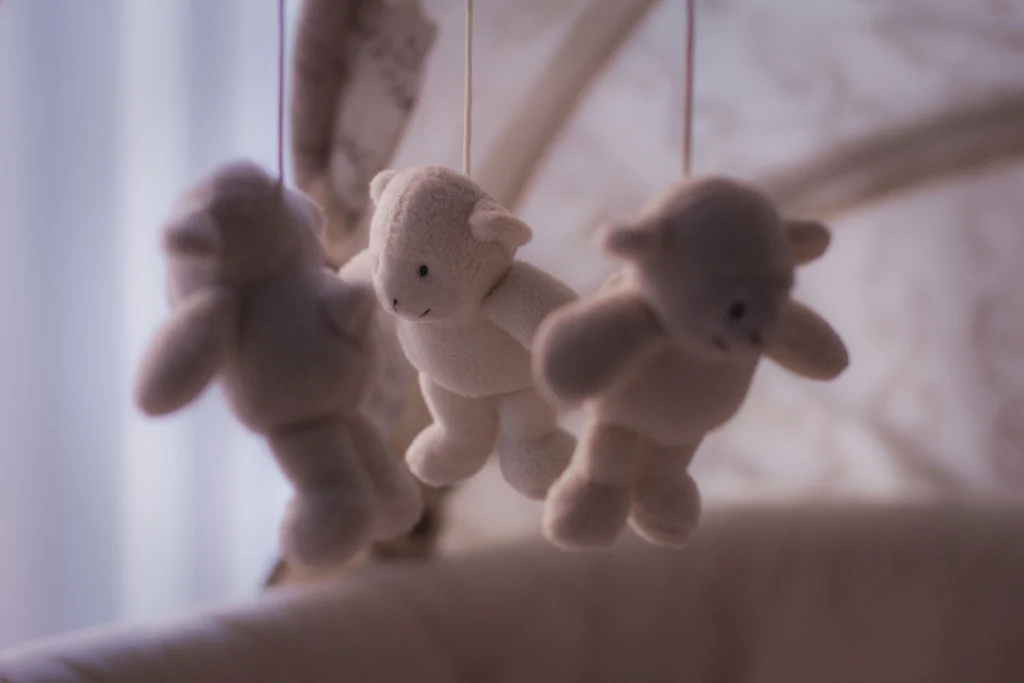
Read more: How to incorporate music therapy into children's daily routines
Choosing music with abrupt volume changes, very high-pitched vocals, or complex arrangements stimulates the brain instead of calming it, producing the opposite effect to what is desired in daily life.
Replacing human contact and a comforting presence solely with electronic devices reduces emotional comfort, making bedtime cold, impersonal, and stressful for the child.
Adjusting the music selection sensitively and moderately ensures that technology acts as a positive auxiliary tool, without compromising your child's healthy emotional development.
When should you consult a child sleep specialist?
Even with a suitable environment and sound routines, if the child shows persistent difficulty falling asleep, snoring or waking up in panic, it is worth seeking specialized medical advice.
Learn more: How does music influence the development of children's motor coordination?
The pediatrician's evaluation rules out underlying physical problems, such as gastroesophageal reflux, hidden ear infections, respiratory allergies, or obstructive sleep apnea, that interfere with the quality of nighttime rest.
Consulting specialists helps adapt sleep hygiene to your child's individual developmental needs, adjusting schedules and behaviors in a safe and personalized way.
For official information on public health and early childhood development, please consult the portal of Ministry of Health.
A melodious path to peaceful family evenings.
Integrating the habit of singing or playing soft melodies into daily life transforms bedtime into a magical moment of affection, complicity, and peace between parents and children.
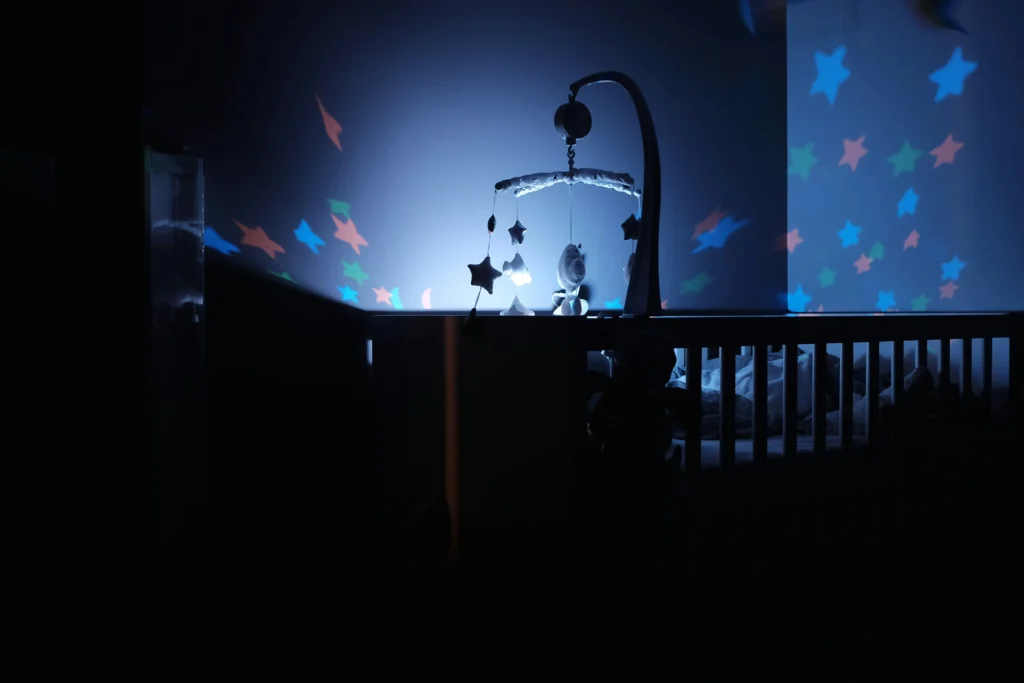
Read more: How to use lullabies to improve children's sleep.
Understanding the biological needs of the little one and respecting their developmental pace with appropriate sound choices ensures the deep rest necessary for strong and happy growth.
Small changes in the nighttime routine generate big results, providing calm nights and radiant days full of energy, health, and harmony for the entire family.
FAQ (Frequently Asked Questions)
Can I use mobile apps to play lullabies?
Yes, as long as the cell phone remains in airplane mode, with the screen off, and positioned at least two meters away from the baby's crib.
Are instrumental songs better than songs sung by parents?
Parents' voices are always the best option due to the affectionate bond, but soft instrumental songs at low volume work perfectly as an excellent alternative.
Can white noise be combined with soft melodies?
Yes, you can, but ideally you should use white noise to isolate household noises and only play music during the initial stages of slowing down and falling asleep.
Until what age is lullaby music recommended for children?
There is no age limit, as soft music helps older children and even adults relax, simply adapting the repertoire over time.
