
Pentatonic scales on the guitar: practical applications in Brazilian Popular Music (MPB) and rock.
Mastering the Pentatonic scales on the guitar This represents the most transformative step for any musician who wants to create expressive solos, improvise with confidence, and understand practical harmony in a visual way.
Advertisements
Unlike traditional diatonic scales that have seven notes, this simplified five-tone model eliminates semitone intervals, which often create tension.
This clean melodic characteristic transforms the pentatonic scale into an incredibly versatile tool, allowing the guitarist to navigate major and minor chords without the risk of sounding out of tune.
Whether developing an acoustic instrumental arrangement or conducting a striking improvisational line, this structure offers fluid melodic pathways.
What is the intervallic structure of the pentatonic scale and why does it work?
The construction of a minor pentatonic scale is based on extracting five fundamental notes from the natural minor scale, maintaining the intervals of tonic, minor third, perfect fourth, perfect fifth, and minor seventh.
Advertisements
By removing the second and sixth degrees from the original scale, the possibility of creating tritone intervals during fast melodic phrasing is eliminated.
In practice, this absence of semitones creates an acoustic space where all the notes of the scale sound consonant with each other, regardless of the order in which the musician decides to play them.
This factor gives the guitarist enormous creative freedom to focus on expressiveness, picking dynamics, and rhythm, without excessive concern for mistakes.
Visualizing these intervals along the instrument's neck requires mentally mapping five interconnected geometric patterns or "shapes" that repeat from the twelfth fret of the guitar.
Memorizing the exact location of the tonic notes within each of these shapes ensures a smooth transition between different fingering regions.
How to apply the shapes of the minor pentatonic scale to classic and modern rock solos?
Rock and roll built its historical identity on the foundations of the minor pentatonic scale, using techniques of physical expression such as bends, vibratos, hammer-ons, and pull-offs on steel strings.
The first scale pattern, located from the tonic note on the sixth string, serves as the basis for immortal riffs in the history of international music.
To create dynamism in rock music, the guitarist must learn to connect the different scale shapes, sliding their index finger along the strings to reach higher registers on the fretboard.
This horizontal movement breaks the monotony of mechanical vertical solos, allowing for the creation of extended phrases that accompany the band's growing energy.
To consult articles on the history of stringed instruments, access validated music teaching methods, and read analyses on the evolution of acoustics in Brazil, the National Library Foundation (bn.gov.br) It preserves the largest collection of historical records in our country.
| Pentatonic type | Native Interval Structure | Resting Note (Example in A) | Common Stylistic Application |
| Minor Pentatonic | Tonic, minor 3rd, perfect 4th, perfect 5th, minor 7th | There (The) | Rock, Blues and Heavy Metal Solos |
| Major Pentatonic | Tonic, major 2nd, major 3rd, perfect 5th, major 6th | There (The) | Ballads of Brazilian Popular Music (MPB), Pop and Country Music |
| Pentatonic scale with Blue Note | Tonic, minor 3rd, perfect 4th, diminished 5th, perfect 5th, minor 7th | There (The) | Classics of Blues, Jazz and Soul Music |
| Altered Pentatonic | Tonic, major 3rd, perfect 4th, perfect 5th, minor 7th | There (The) | Sophisticated Bossa Nova harmonies |
Why does the inclusion of five-tone scales enrich the sophistication of Brazilian Popular Music (MPB)?
Unlike rock, which seeks saturation and aggression, Brazilian Popular Music utilizes... Pentatonic scales on the guitar to weave subtle arrangements between the rich chord progressions with extensions.
Bossa nova and samba-jazz composers often overlay the minor pentatonic scale of a key over a corresponding major chord, generating refined sounds.
Playing the B minor pentatonic scale over a G major seventh chord, for example, highlights noble intervals such as the ninth, the major third, and the sixth.
Read more: Comparison of clip-on tuners for stage and practice.
This harmonic substitution technique allows the musician to create floating melodies that sound modern, without the need to resort to complex exotic scales.
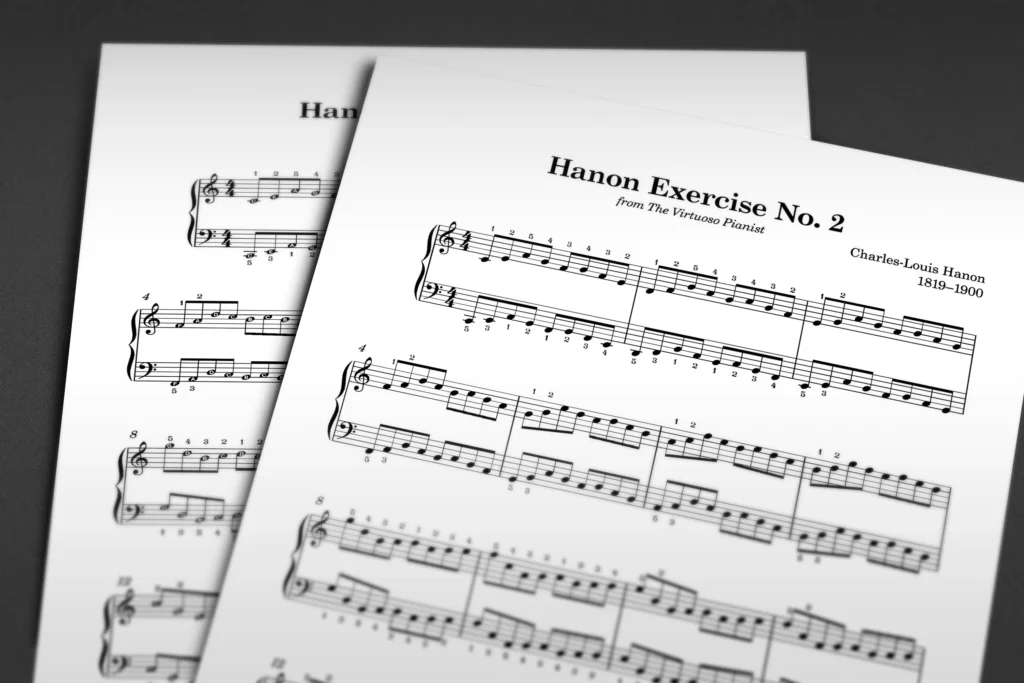
This application requires a precise rhythmic approach, emphasizing the balance of Brazilian syncopations and the use of right-hand fingering techniques instead of plastic picks.
The Brazilian guitarist uses the notes of the scale to create small melodic responses in the empty spaces left by the main vocal line.
When does the addition of the "Blue Note" transform the intent of your musical phrasing?
The technical evolution of this five-note system reaches its interpretative peak with the introduction of a chromatic passing note positioned between the fourth and the perfect fifth.
This tense interval, known in the musical world as blue note, it adds a melancholic and expressive characteristic that is indispensable for blues soloists.
The correct use of this passing note requires that the musician not rest on it for too long, using it instead to quickly connect neighboring degrees of the scale.
This subtle chromatic tension breaks the linearity of the pure pentatonic intervals, adding spice and mischief to both rock solos and Brazilian choro music.
Learn more: Simple Method of Improvising on the Sax with the Pentatonic Scale
Training auditory perception to identify the exact moment to insert melodic intention differentiates mechanical guitarists from expressive instrumentalists who engage in dialogue with the listener.
THE blue note It functions as an emotional bridge connecting the mathematical precision of the scale with the raw feeling of the artist.
To explore academic research on ethnomusicology, read theses on the structuring of harmony in Brazilian music, and access digitized historical scores, visit the institutional portal of University of São Paulo (usp.br) It makes available the collection of its music and arts faculties.
Elevating the level of your musical expression through the conscious study of strings.
An anatomical understanding of the guitar neck frees the musician from the constraints of automatic reproduction, transforming theoretical knowledge into a tool for instant artistic creation.
Dedicate daily time to studying five-tone formats to expanding your musical color palette, allowing you to move naturally between different aesthetic styles.
Read more: How to use scales to improvise in different styles.
Study the intervallic relationships organized in our key chart, practice the horizontal transition between the five shapes, and apply the concepts to your favorite Brazilian popular music (MPB) songs.
By taking full technical control of your instrument, you develop a unique artistic voice, capable of moving and captivating audiences in any style.
Frequently Asked Questions about Scales on the Guitar
What is the practical difference between the fingering of the major and minor pentatonic scales?
Both share the same visual shapes on the fretboard, but the major pentatonic scale starts three frets behind the relative minor scale to adjust for the tonic note.
How can you prevent pentatonic scale practice from sounding repetitive or like an exercise?
Create short rhythmic motifs of two or three notes, alternate the direction of the phrases, and insert intentional pauses to simulate human breathing.
Is it possible to use alternate picking in all positions on the scale?
Yes, the two-note-per-string arrangement typical of this scale facilitates the application of continuous alternate picking, increasing the speed of solos.
Does the shape of the nylon or steel strings influence the execution of the shapes?
The shapes are mathematically identical, but steel strings facilitate bending techniques, while nylon strings favor expressive fingerpicking in Brazilian Popular Music (MPB).
